
Over the years, I’ve traveled and dabbled among the northwestern rivers of the Amazon through Colombia and Ecuador. This year, I skirted the east and south sides of the Amazon when I toured through Brazil and Bolivia. Finally, in Peru, I decided to take a trip deeper into the Amazon, to really experience what it was all about. So, for the final splurge of my South America winter adventure, I traveled by plane and boat into this immense and biodiverse landscape.
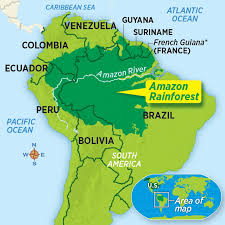
The Amazon Rainforest and its Scale of Importance
At over two million square miles, the Amazon Rainforest is the largest tropical rainforest in the world. By itself, it represents the mass of over half the world’s remaining rainforests. Its importance cannot be exaggerated. The Amazon acts as a climate regulator for the world, storing over 150 billion tons of carbon as well as 20% of the world’s freshwater. This forest is so large, it influences weather patterns around the globe and is home to over 200 different Indigenous communities. Furthermore, the Amazon provides habitat to 10% of the world’s plant and animal species; many of our modern medicines are derived from plants native to the Amazon. But here’s the kicker, we don’t know exactly what else is in the Amazon because experts believe that 60% of this rainforest still remains completely unexplored. It’s that big.
Visiting Rio Tambopata and the Tambopata Reserve
For me to really experience the Amazon in the few remaining days I had, I found it easiest to fly into a remote region, stay at a fairly expensive all-inclusive lodge and take excursions into the wilderness from there. After a lot of research, I decided that the Tambopata Reserve in the Peruvian Amazon was a great place to go.
The Rio Tambopata region is a global hotspot with 1.5 million hectares protected in the Tambopata National Reserve. This is vital habitat for endangered species like the giant otter (which I saw!) and the jaguar (which I didn’t see). The region, based out of the city of Puerto Maldonado, is also a hub for scientific research and many different ecotourism ventures. I liked the sound of supporting all of that, so I booked a few days of adventure in luxury.
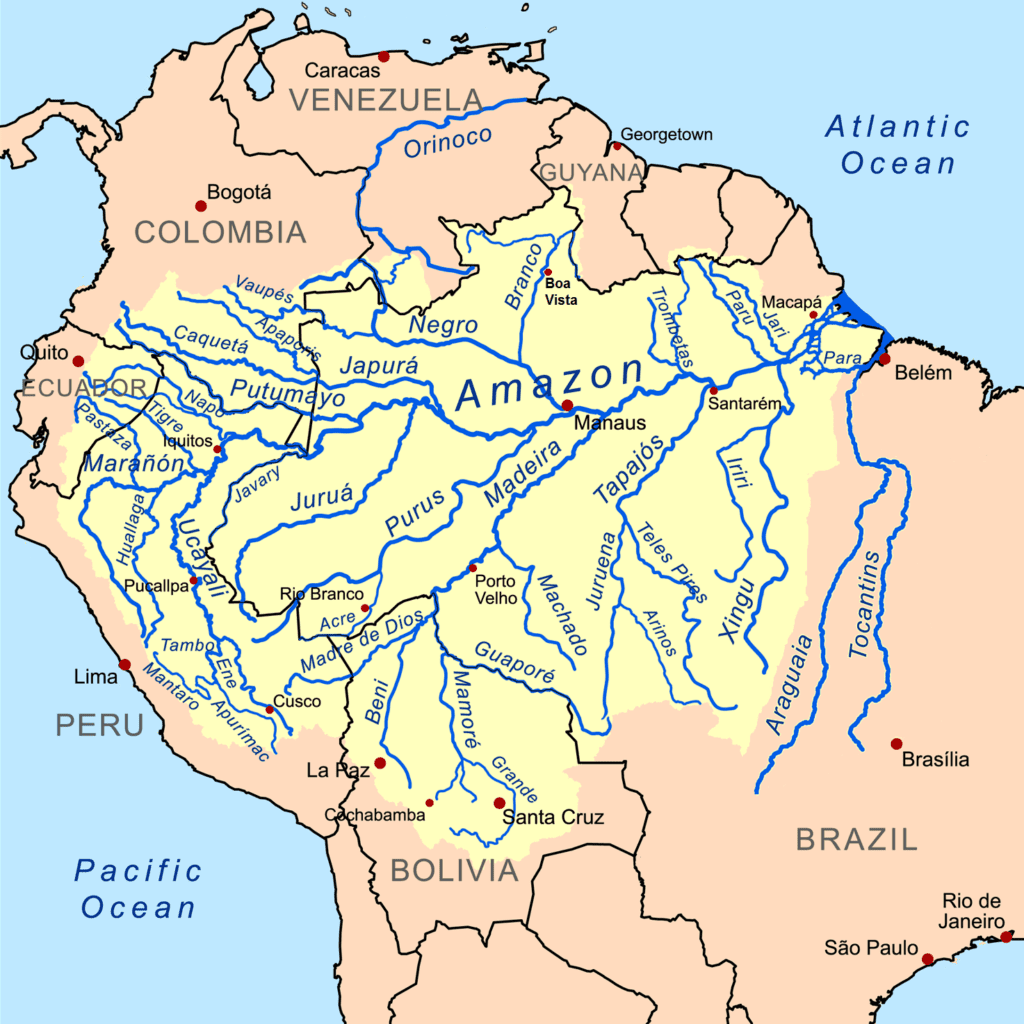
Do you see the Madre de Dios River in the bottom left corner of the area highlighted in yellow? The Tambopata River is a smaller tributary that flows into the Madre de Dios on its way to the main stem of the Amazon. This was where I visited the Tambopata Reserve.
Unknowingly, I booked this group adventure in the “low season” which means there aren’t a lot of other travelers this time of year. I ended up having a private guide, Raúl, a private boat driver, and the entire experience to myself! That’s luxury!


After flying into the small, muddy city of Puerto Maldonado, we took a power-canoe for two hours up river to the lodge. Our trip started in intense sunshine, and quickly turned into a sideways downpour. Then, the sun emerged again. It was my first taste of life in the rainforest!


Explorer’s Inn, Tambopata Reserve
Soon, we arrived at Explorer’s Inn Tambopata Reserve. In the hotel rooms and throughout the main lodge, there are few walls- only screens. You can only imagine the sounds of the birds during the day and the insects at night. It was a lovely experience all around!


From the lodge, Raúl and I walked and canoed in all directions for three to four different excursions each day. The first experience was a night-hike. Raúl had a black-light and a powerful flashlight to be able to find the smallest of creatures in the dark.


We saw lots of spiders, crickets, grasshoppers, katydids, termites and ants as big as my finger! For me, the most impressive was the tree frog with transparent legs and the cooperative colony of spiders that wove giant nets – like walls – in the forest to capture birds in flight. That photo is in the third row, left side.
The next morning, we took the boat to the other side of the river where we hiked through a virgin forest and boarded a different boat onto Tres Chimbadas Lake.


Here’s a snippet of sounds along the shore.
The early morning on the lake was beautiful and we watched a family of Giant River Otters for a long time. I was so entranced with their playfulness tossing and turning in the water, I forgot to take many pictures. Luckily Raúl grabbed my camera and took these photos for me.


On the way back across the lake and river, we spotted many other species… butterflies, bats sleeping in a line on a tree, capybaras feeding on the shore, macaws squawking from the canopy, a black caiman snoozing in the shade and a piranha, which Raúl caught with a fishing pole. We also saw bands of monkeys and other birds in the treetops, all too fast to photograph.


On another adventure we saw different species of parrots, various animal homes and so many different trees- ficus, avocado, “walking trees” and Brazilian nut trees, too!


More sounds from the Amazon…
All through our adventures, I appreciated Raúl and his expertise. He was born further afield with a machete in his hand and an ear to all the noises. He walked quickly along the muddy paths, spotting wildlife and tracks in an instant and interpreting all of the animal sounds as we went. He talked passionately about the problems with illegal logging, hunting, and the great boondoggle of carbon offsets.
But he also expressed a lot of hope in different efforts to protect larger and larger swaths of the Amazon. The best efforts are giving local people an economic stake in protecting this vital ecosystem. It’s a lot of responsibility on them to save this place for the future of our world..
On my final day, we headed to a research tower for a sweeping view above the forest canopy, and an incoming storm.


Turn up the volume for this video and listen to the deep vocalizations, or groans, of the howler monkeys. I was disappointed that I hadn’t seen any. They make this unreal sound.
But then, when we returned to the lodge, a wonderful surprise was waiting for us in the trees… a family of howler monkeys. What a joy to watch them through the telescope!


A few days on the Tambopata River was a beautiful and relaxing way to experience the sights and sounds of the Peruvian Amazon Rainforest. It was such a privilege to be there. Now, I have a much better understanding of the reasons for protecting, and the challenges to protecting, this vital region of our planet.


And… that’s a wrap on my Winter 2025/2026 Travels. Back to Alaska I go for another great season as a Tour Guide and Bus Driver in Skagway, Alaska!
Stay tuned for more adventures in the future!

Tracey
OMG Becky. I spent some time reading, looking, and listening to this post. Also showed it to George. What an amazing opportunity. The large spider web to catch birds totally freaked me out! Thank you for sharing!!