Have you ever celebrated Carnaval?
Carnaval is a crazy, frenetic celebration featuring parades, street dancing, elaborate costumes, and music. It often occurs in February or March before the 40 days of Lent, acting, if you will, as a last-minute indulgence of all things fun. Of course, Carnaval is most famously celebrated in Brazil, but many other countries around the world have their own version including Colombia, Spain, Italy, France and Mardi Gras in the United States. For a comparison, in 2019, I wrote on this Blog about my host family’s version of Carnaval in Ecuador. You can read about that here.
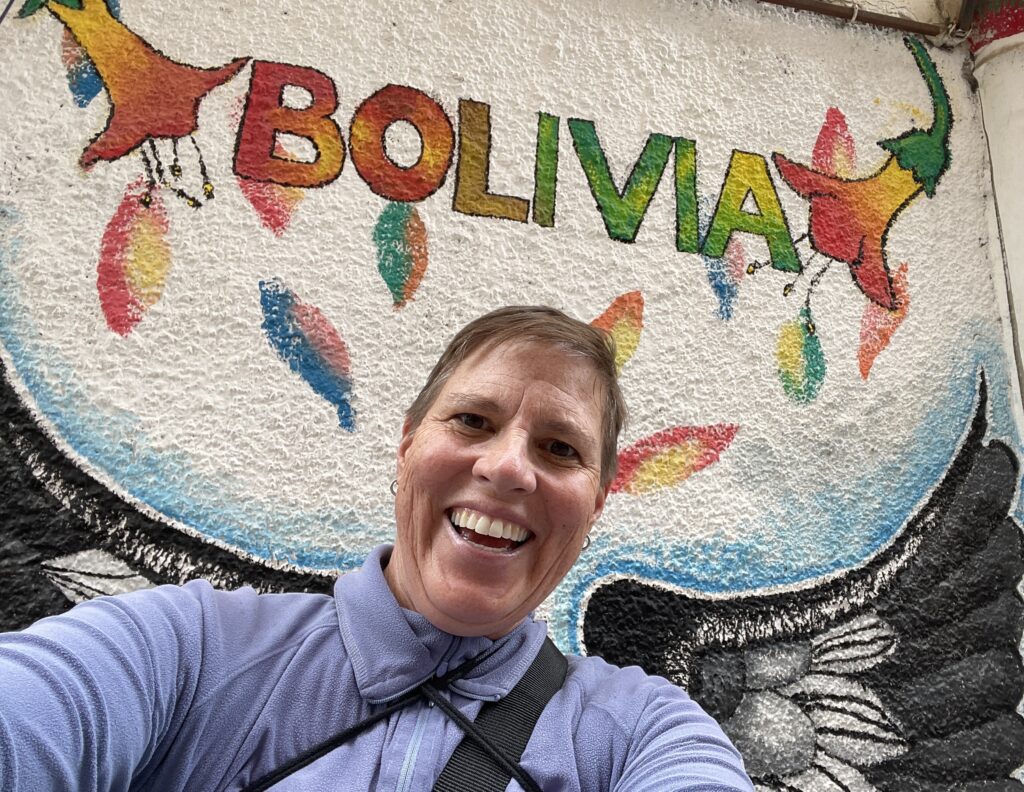
This year for Carnaval, I decided to head for Oruro, Bolivia. This celebration has been recognized by UNESCO for its blending of Indigenous traditions with Catholic beliefs. It is widely considered one of the largest Carnaval celebrations in the world. The primary focus for the weekend was two long 20-hour parades highlighting the culture, history, and people of the Andes Mountains. The parades were immense, and the costumes, choreography and traditions they highlighted were complex. Truly, it was unlike anything I have ever seen before.
In today’s post, I’m going to attempt to break down what I came to understand of the history and symbolism represented throughout this 2-day celebration in the streets of Oruro. I probably will get some of it wrong. Forgive me. But you will get the idea.
Carnaval in Oruro, Bolivia
First, as it was explained to me, the entire parade in Oruro celebrates the history of Bolivia across different time periods showcasing different classes of people. To demonstrate all of these entities, there are 18 different dance groups (called comparsas) who gather, contract their designers for their costumes, learn the specific dances of their characters, and perform during Carnaval celebrations across Bolivia. It’s an immense undertaking for thousands of people, and I think they must start planning immediately for the following year.
I had been warned that Carnaval in Oruro is big and I needed to secure my tickets and housing early. So, through Airbnb, I rented a mattress in the attic of a house (literally) and I paid for bleacher seats for the parade on-line. The room I rented turned out to be with the nicest family who taught me a lot about the history and stories within the celebration. The parade seats I bought on-line turned out to be an “estafa“. That was a new word for me. It means scam. I lost about $90.
So, on the night before the event when I arrived into town, the family who rented me the room helped me buy a real ticket for parade seating. I ended up sitting in a whole section of rowdy college students who reveled all day in the craziness. They felt sorry that I had been scammed and so they gave me a seat in the front row, fed me drinks, and included me in their celebration. My experience couldn’t have been more perfect.
So while getting a little day-drunk with the college kids, I tried to take pictures of all the entities – and the highly artistic costumes – among the chaos! Remember, there were thousands of dancers displaying incredible costumes with an array of colors, symbols and styles, old and new. Together, across this entire parade – and not in any linear order – they were telling the story of the history and people of Bolivia.
Prepare to be amazed!
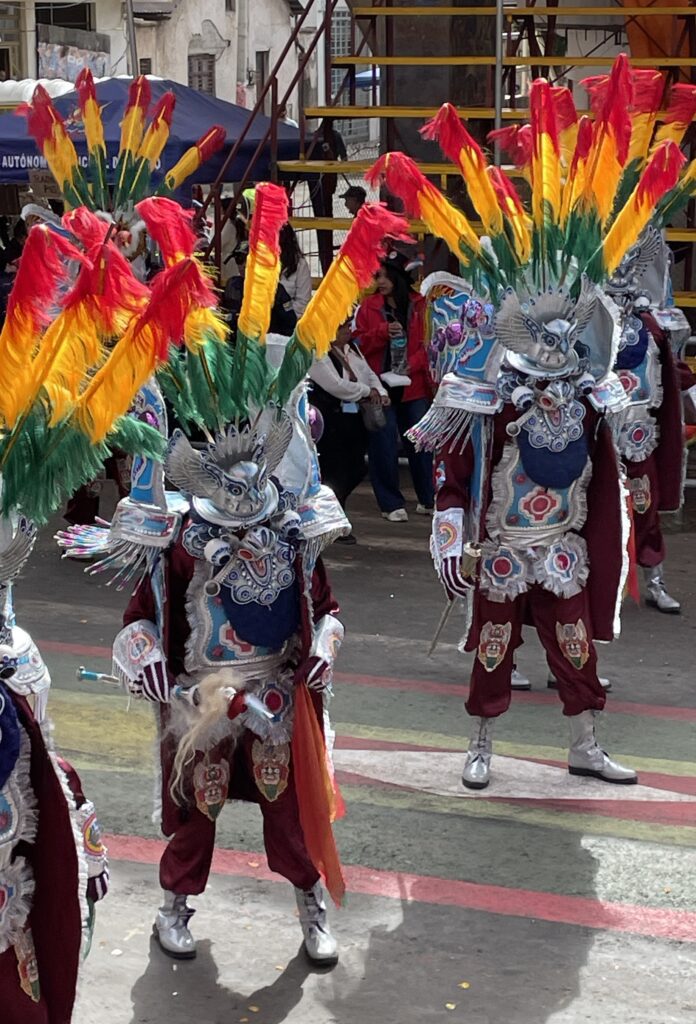
It all Started With the Incas (literally before 7am!)
With very distinguished and valuable costumes, their ceremonial dance included a history of their greatness, and their eventual falling to the Spanish Conquistadores. Their costumes and accessories symbolized their reverence toward Father Sun and Mother Moon.


Then Came the Era of Jesuit and Catholic Missionaries
Since Bolivia no longer has an official religion, representatives of all the different faiths were invited to walk in the parade. Even a Cardinal or Bishop came to the celebration!


Spanish Dancers and Bull Fighting (Waca Wacas) Represented the Colonization by the Spaniards


Each distinct dance group were led along the route by a car decorated in the finest of Bolivian silver. This is to honor Bolivia’s mining heritage, the workers and the resources of Mother Earth.


After each car passed by, the dance groups paraded along to represent the many different people through Bolivia’s history.
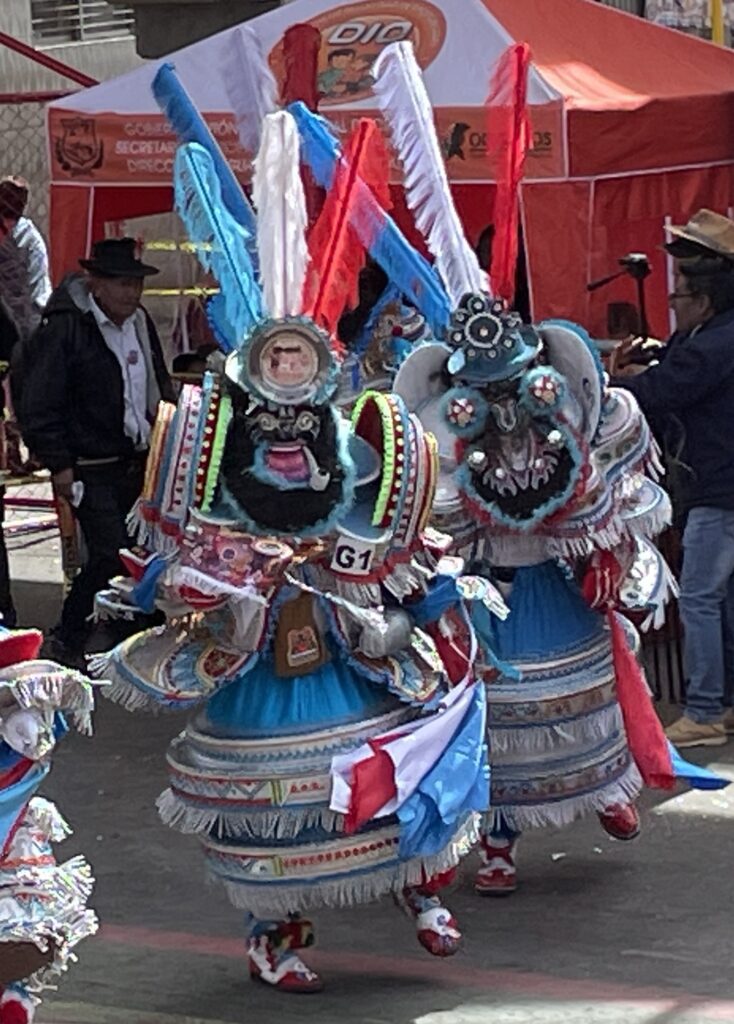
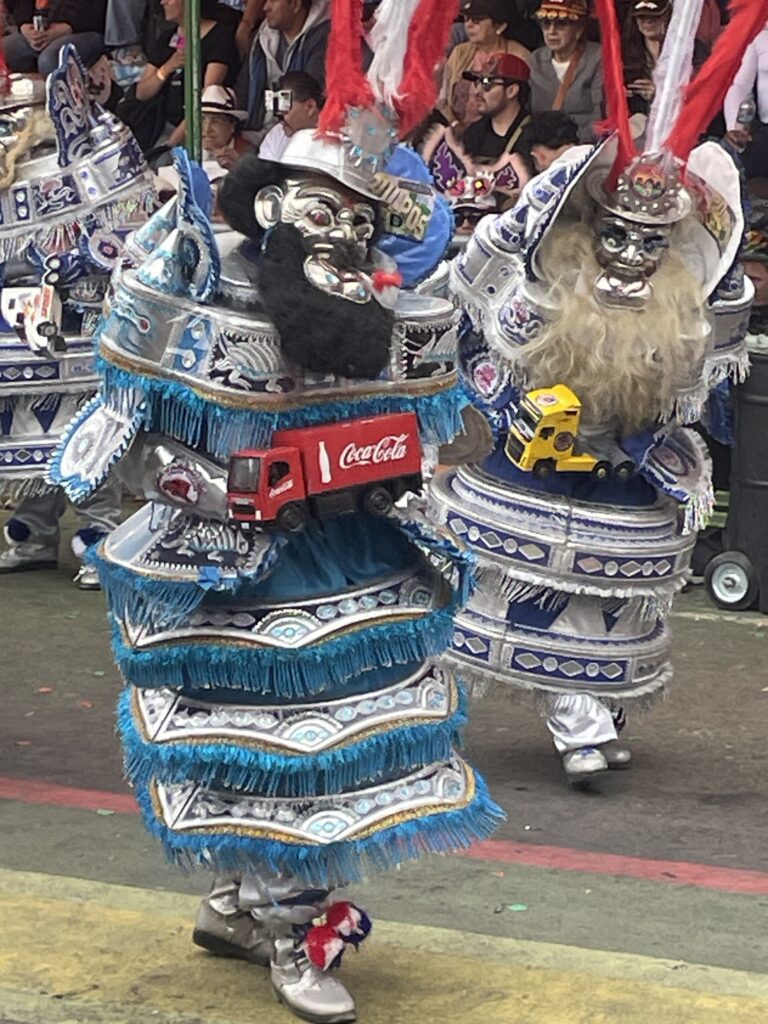
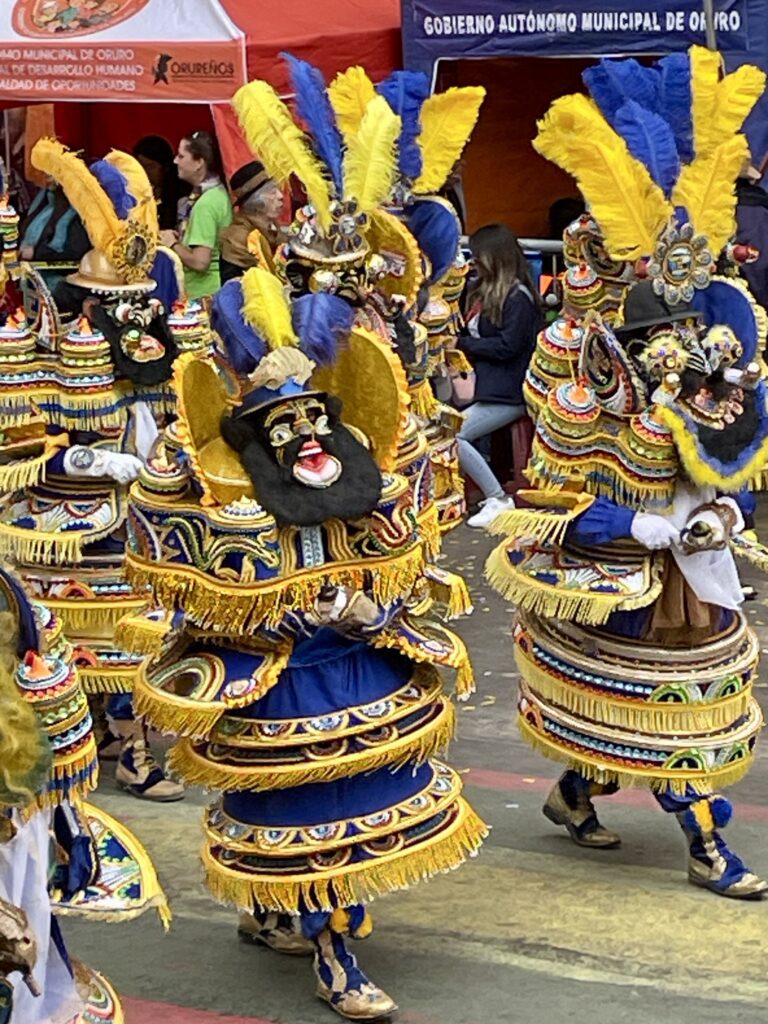
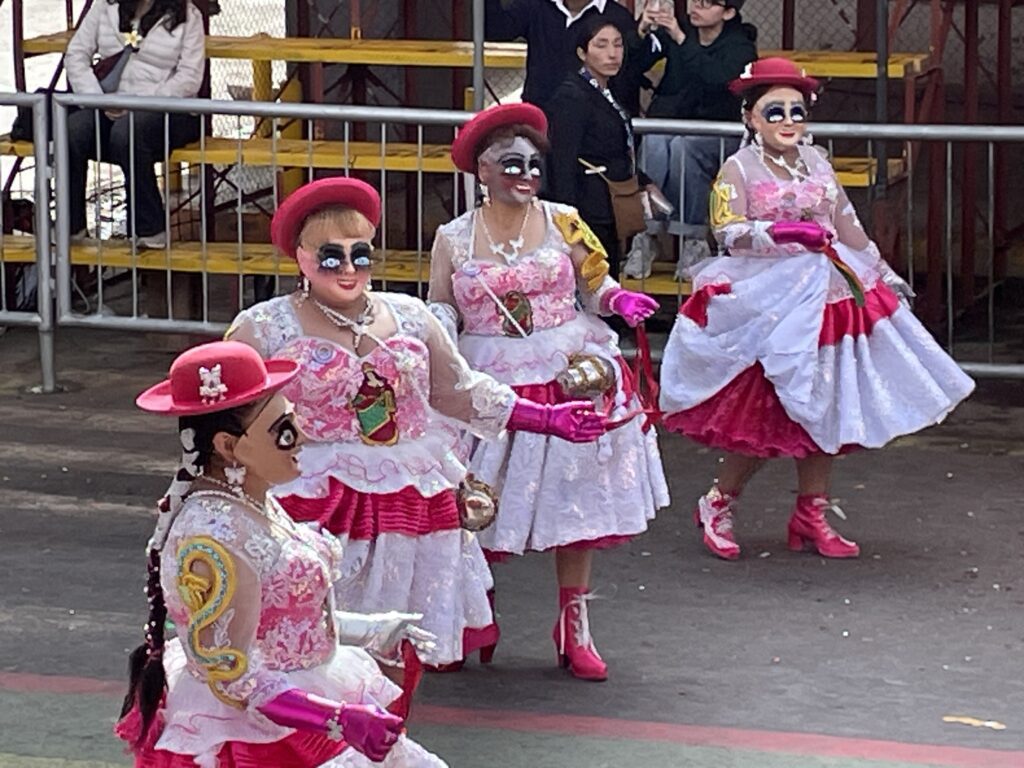
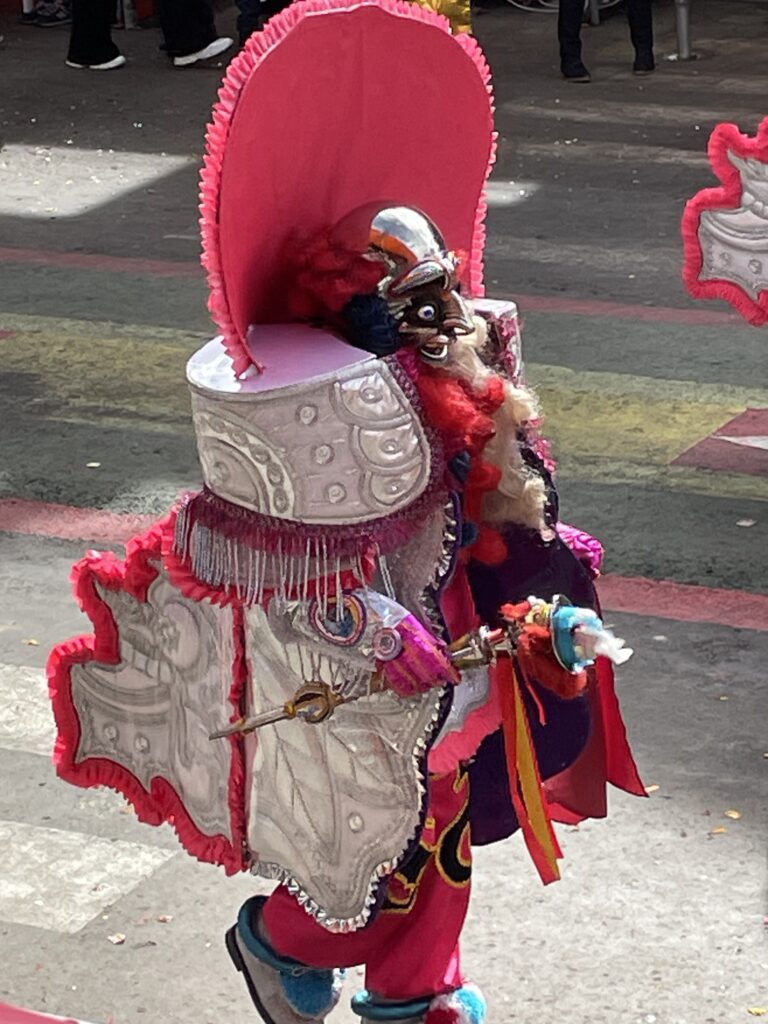
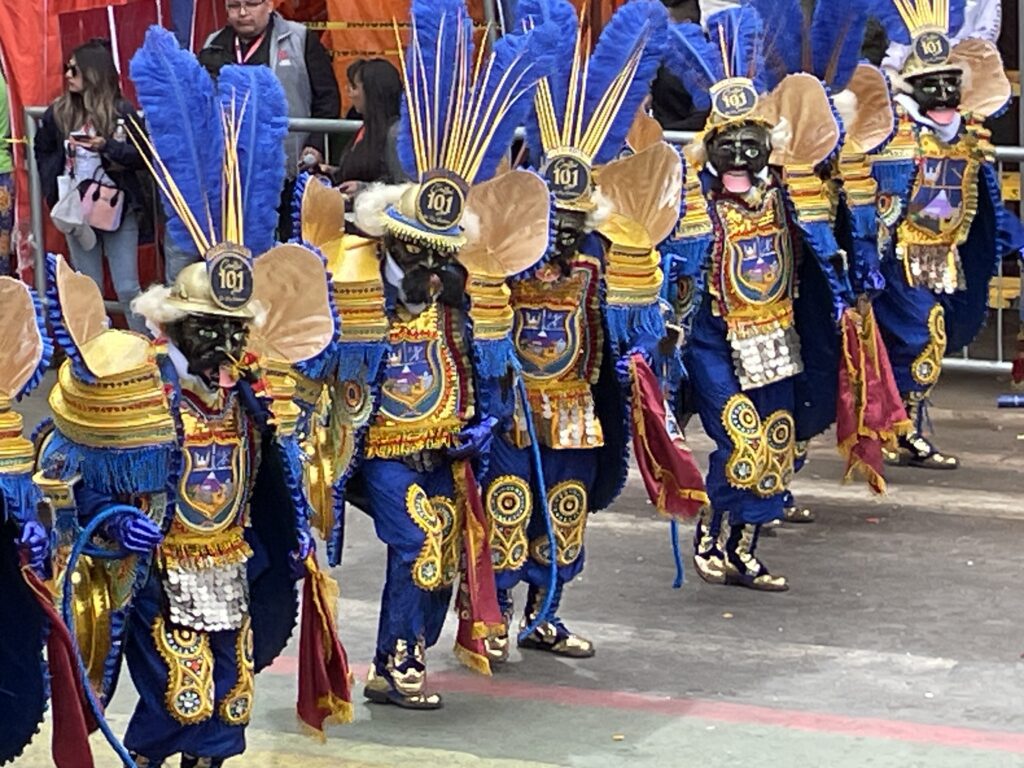
The Slaves (called Esclavos, or Morenos meaning Black Person)
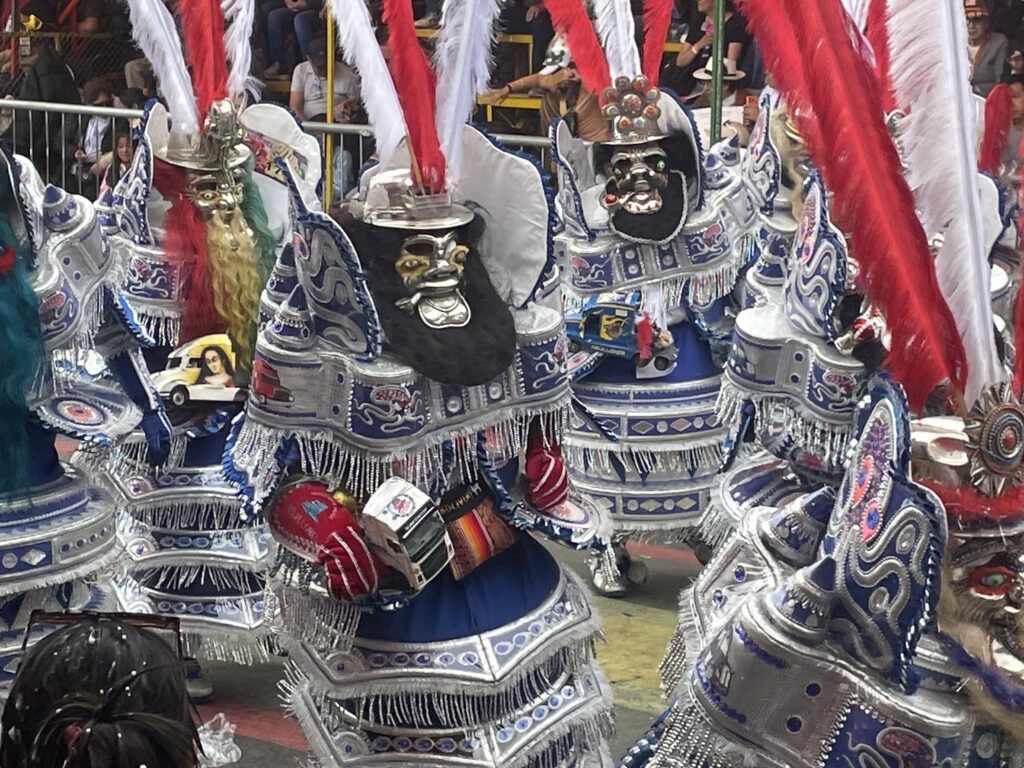
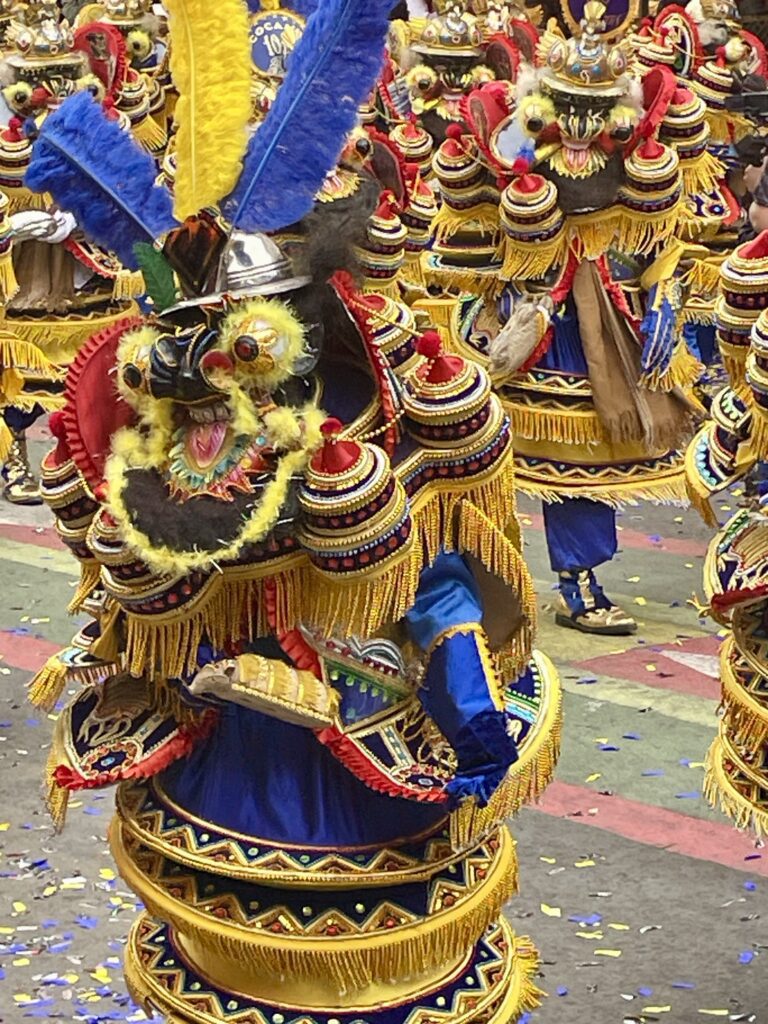
The Slaves were easy to pick out throughout the parade because of their heavy, round costumes, bulging eyes and extruding tongues symbolizing their exhaustion.
Many dance groups carried different forms of noise makers to add to the incessant drum beat of the marching slaves. I noticed that some groups of slaves carried noise makers in the form of trucks. I inferred that this was a political statement against the current government who is eliminating gasoline subsidies, and impacting vital transportation systems and the economy.
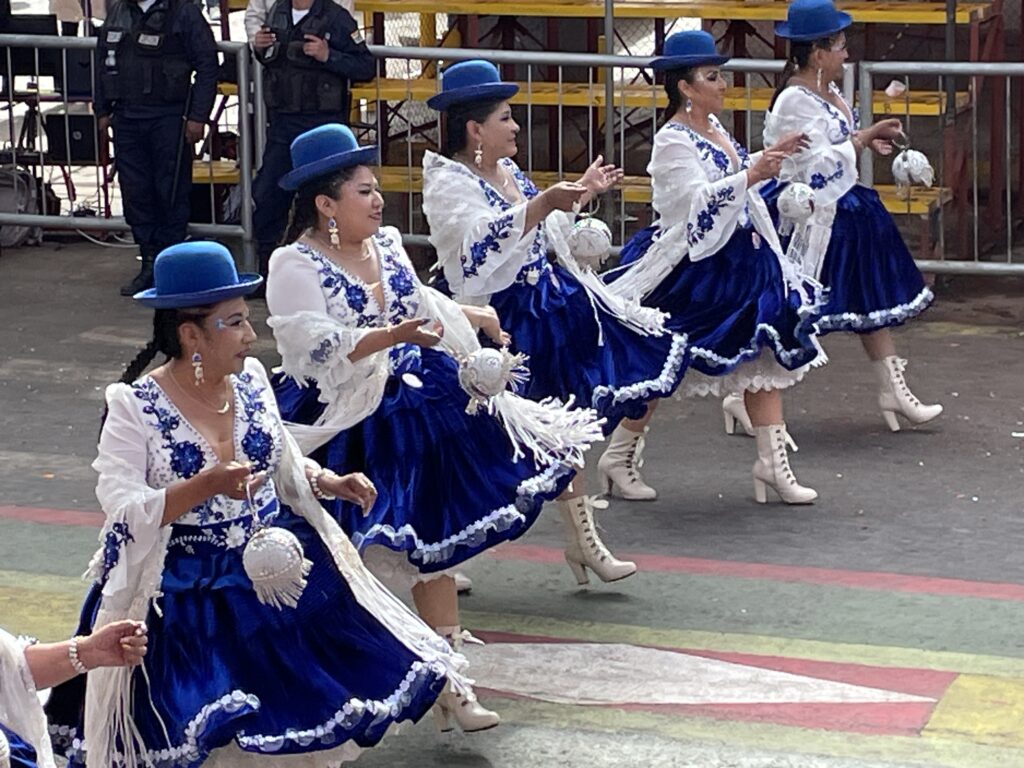
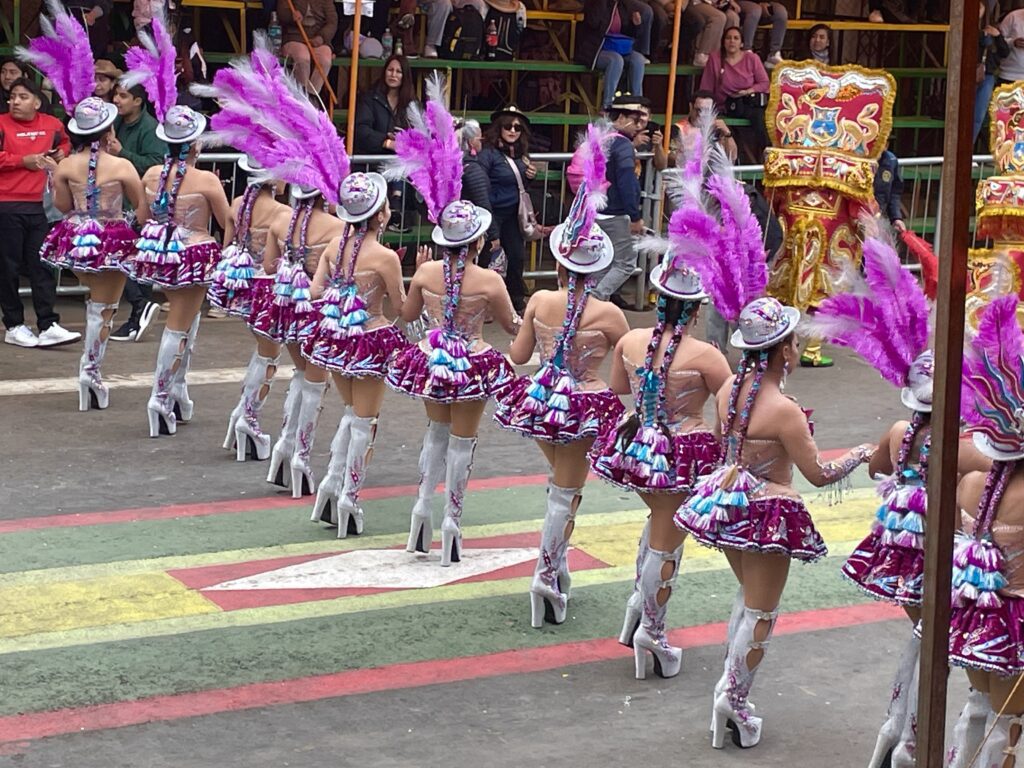
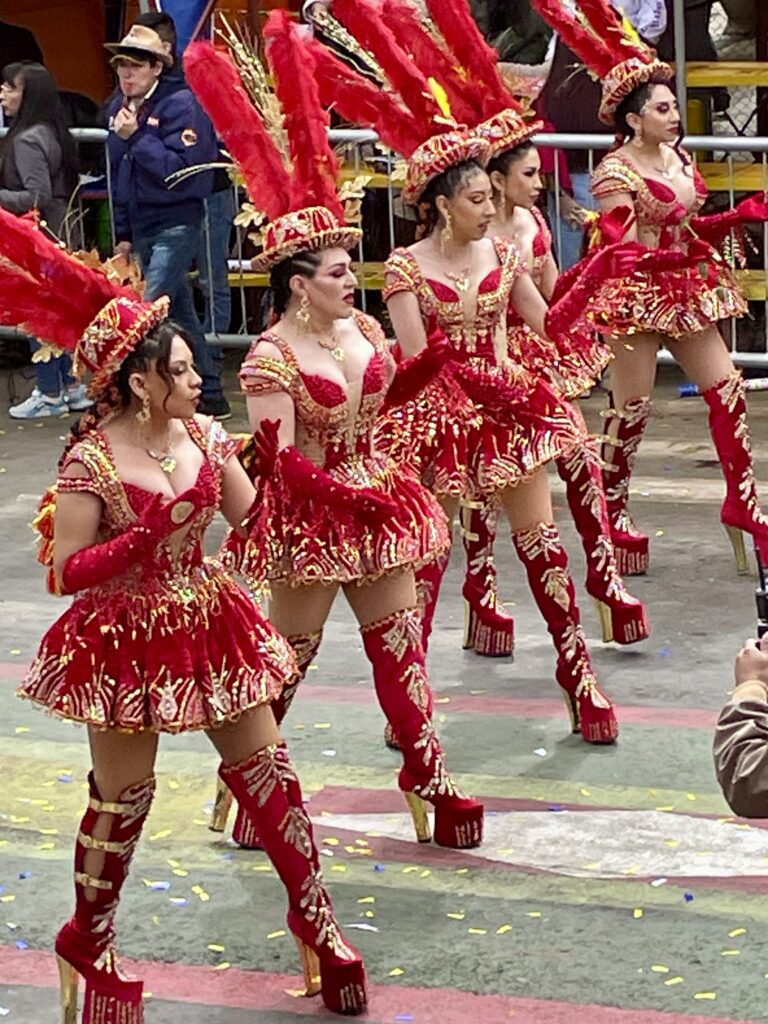
Slave Women (Chinas Moradas)
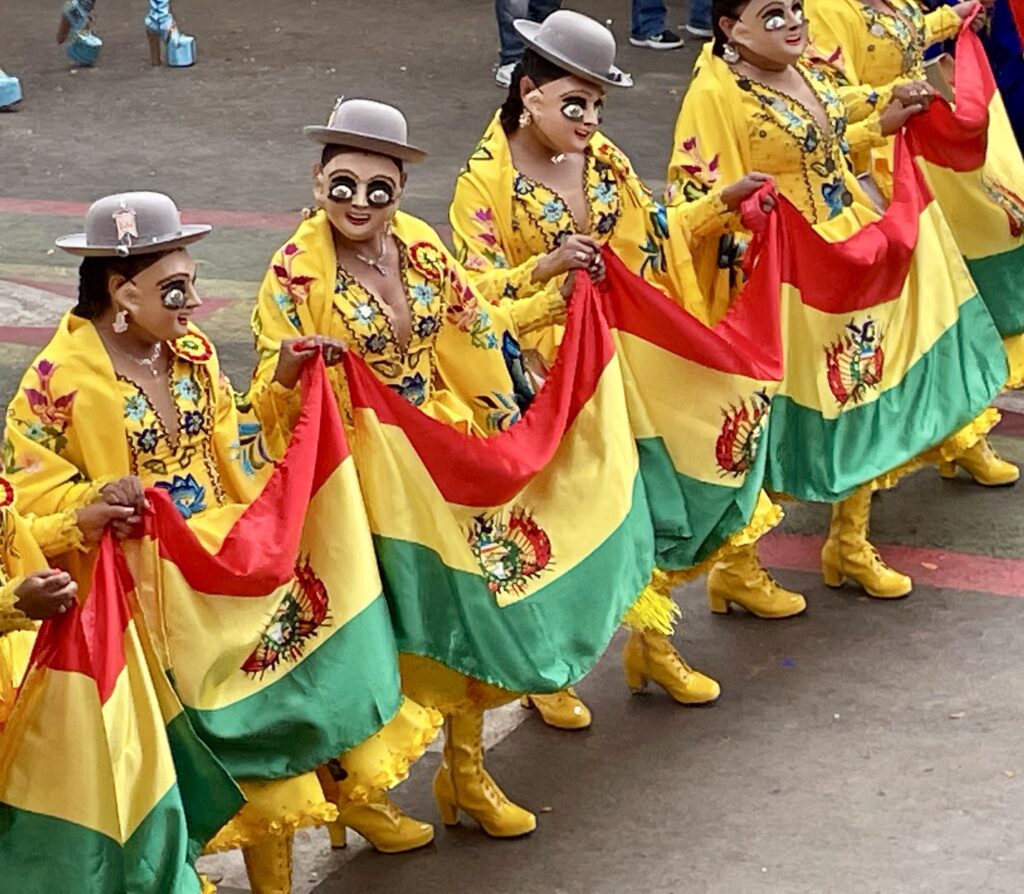
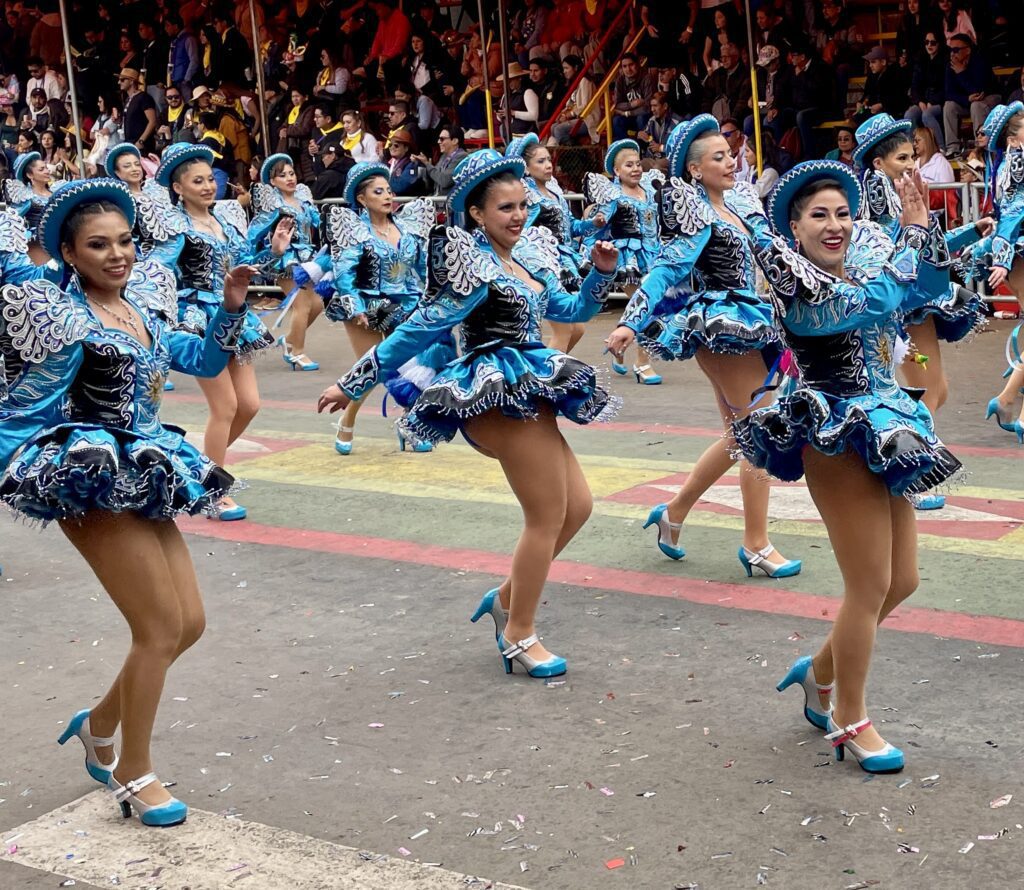
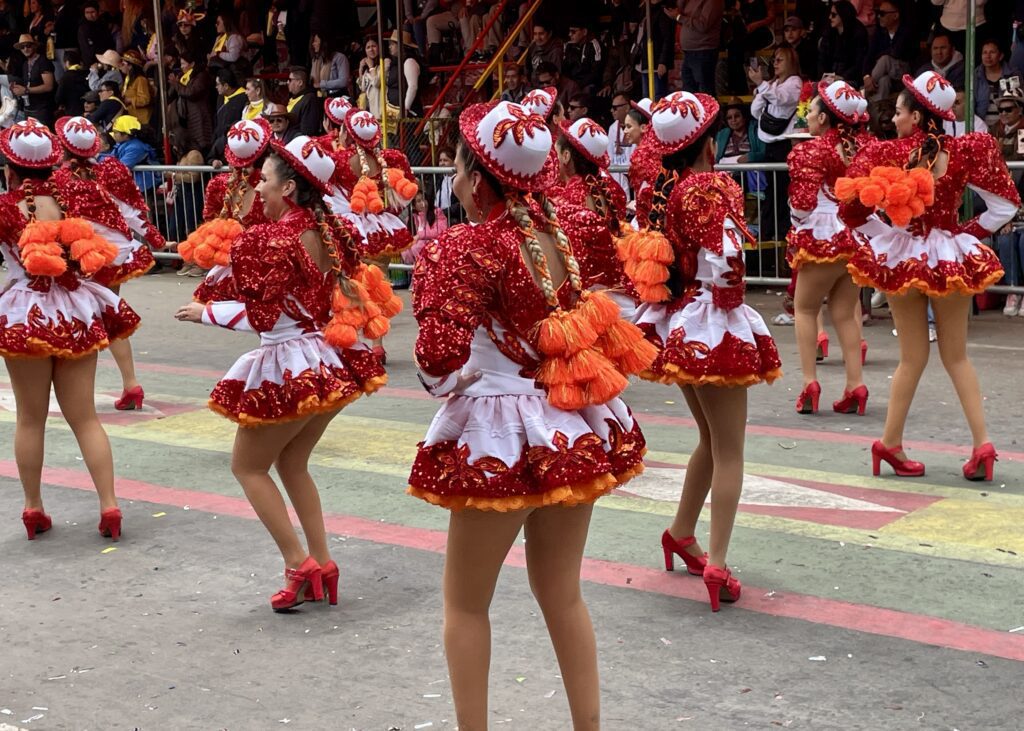
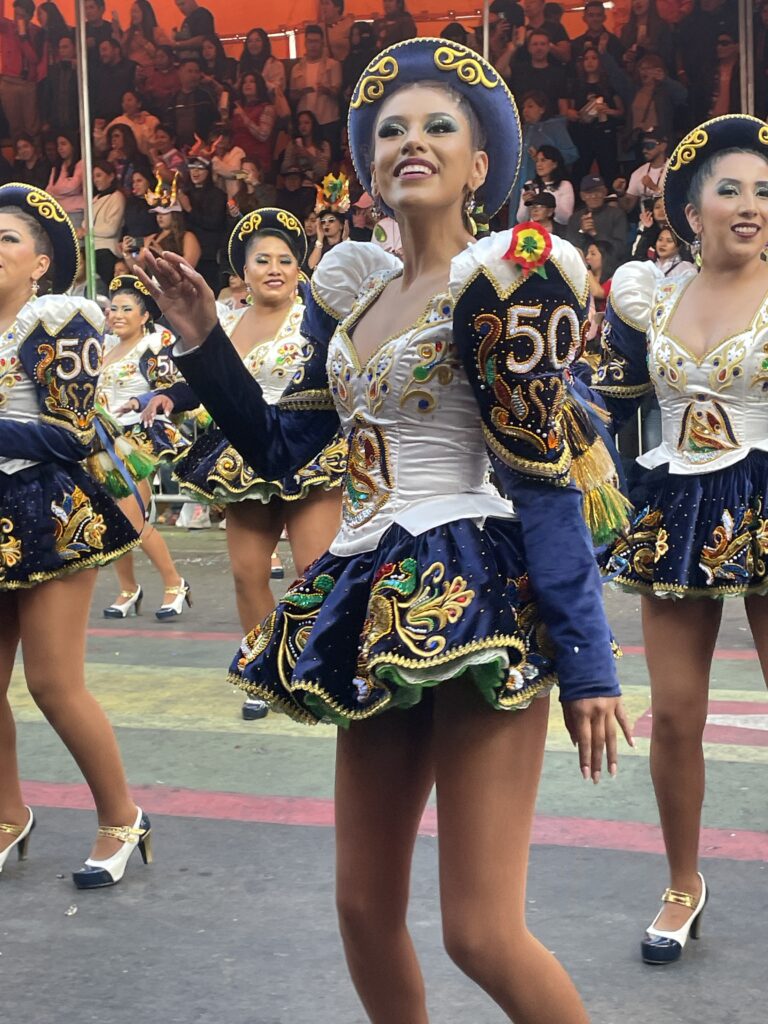
Historically, women were not allowed to dance in Carnaval parades, so men dressed as women played the female roles. Sometime in the 1970’s, women were allowed to enter the parade as the female slaves and were dressed very conservatively. Older traditional women still dance with these styles of dresses. But as times have changed, the female participants have gotten younger and the skirts have gotten shorter and more fancy. The dance they perform, however, hasn’t changed. For more than three kilometers along the parade route, they walked moving their arms and legs to a slow and rhythmic drum beat using a repetitive, robotic motion in a dance called the Morenada. It represents the ceaseless labor of the slaves who worked in the mines.
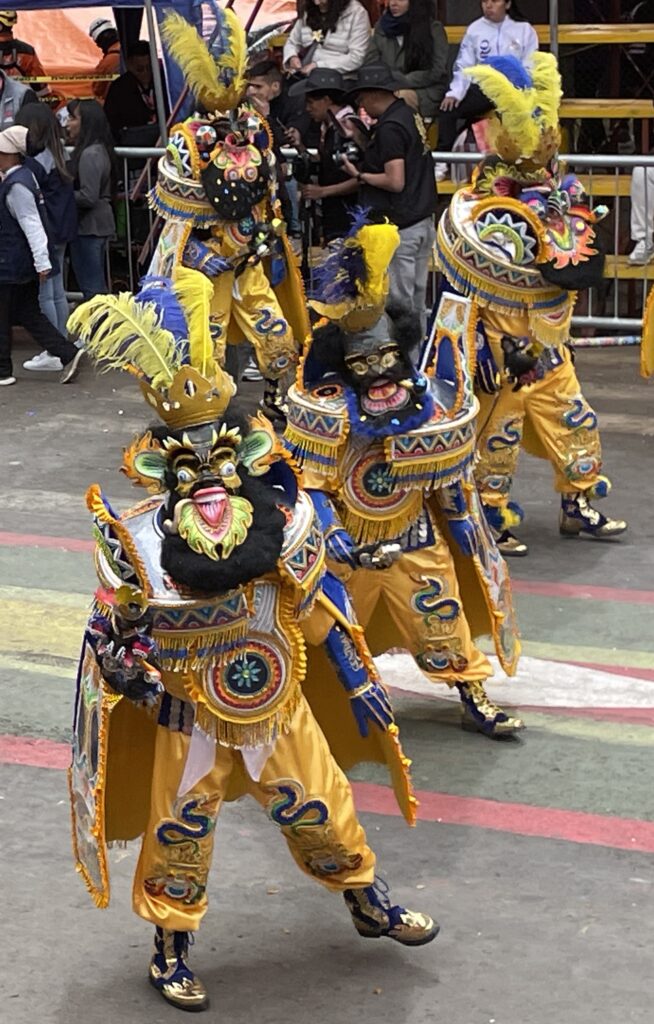
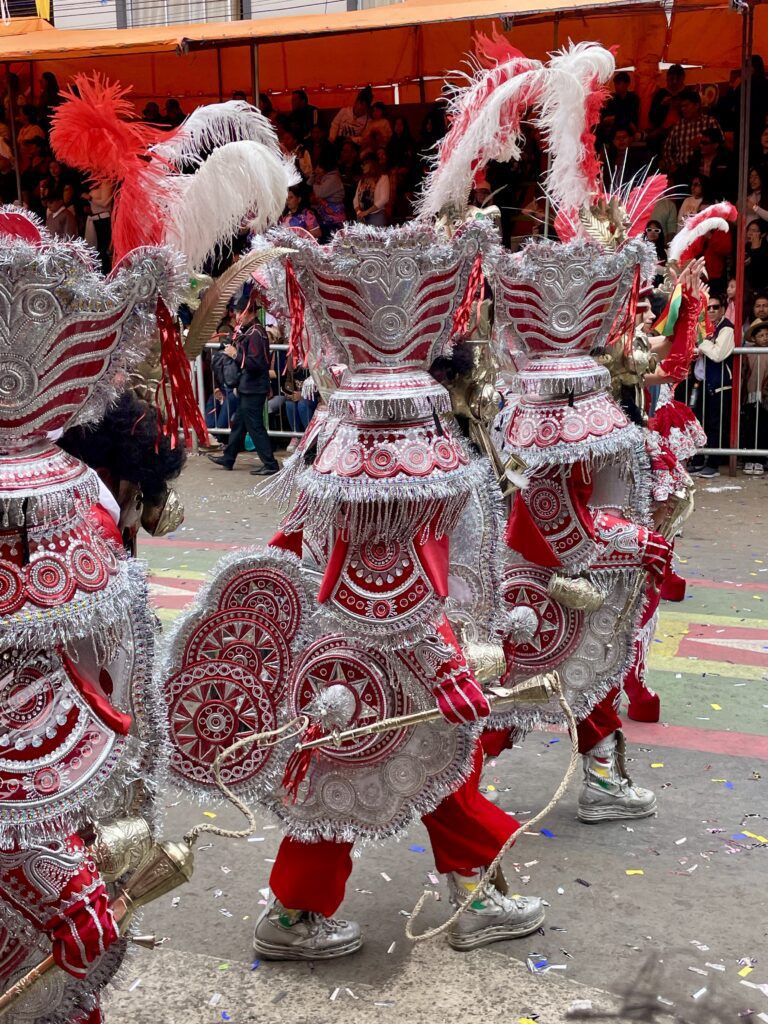
Slave Bosses (Corporales y Corporalas/ Machas)
The Corporales (both males and females) seemed to have the most fun. They represented the Afro-Bolivians that became slave bosses so their dance was lively with kicks and dips to show off their power and strength. However, the bells on their legs also represented the chains that still bonded them as slaves themselves, so their dance is really a satire of their authority.
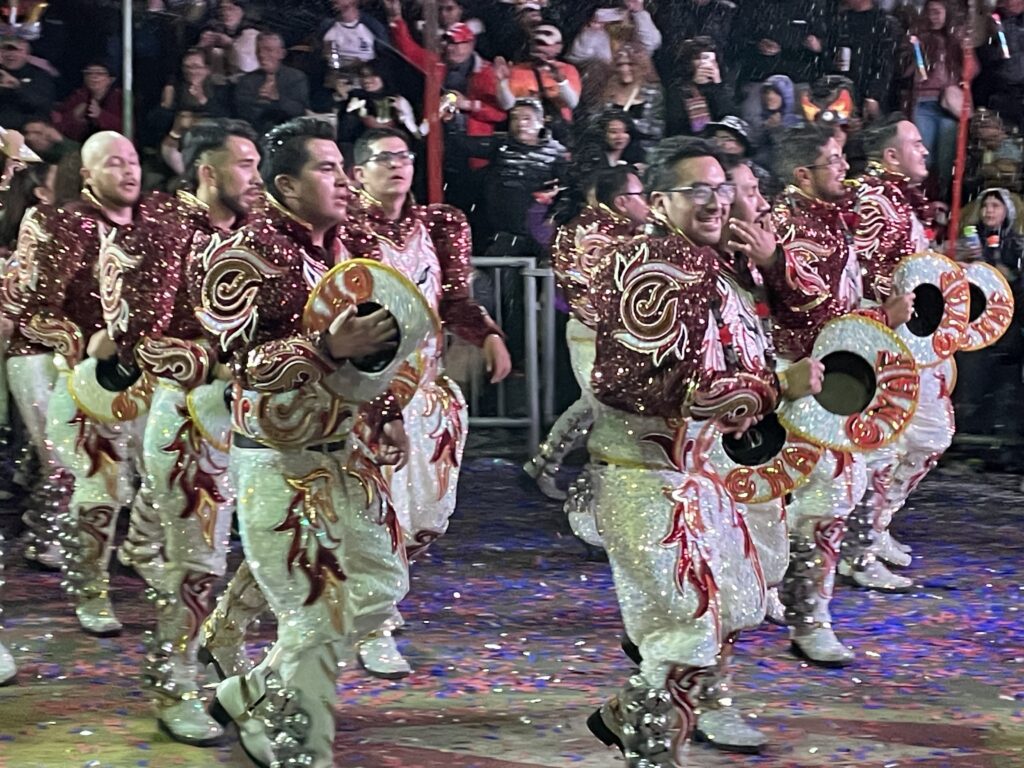
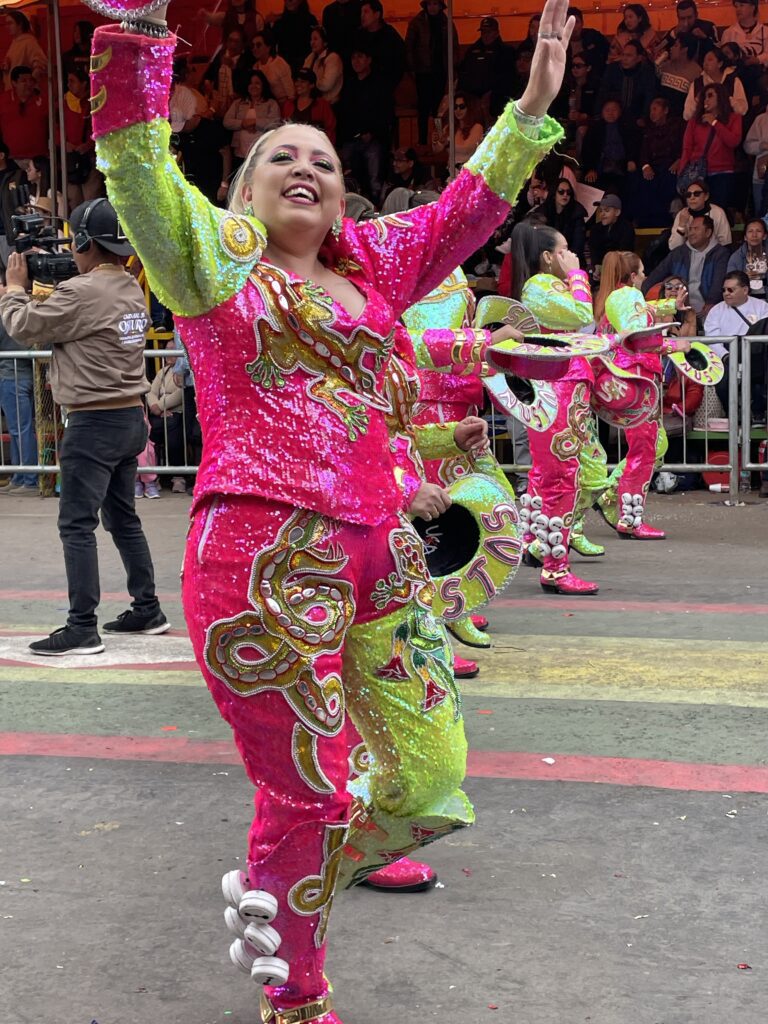
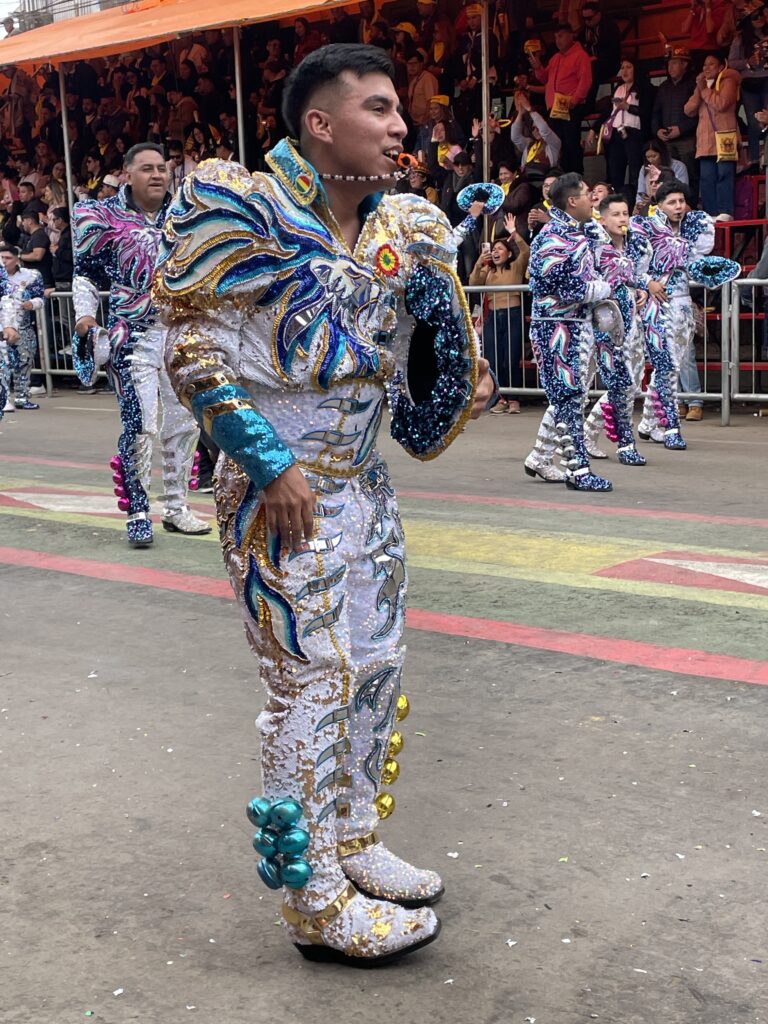
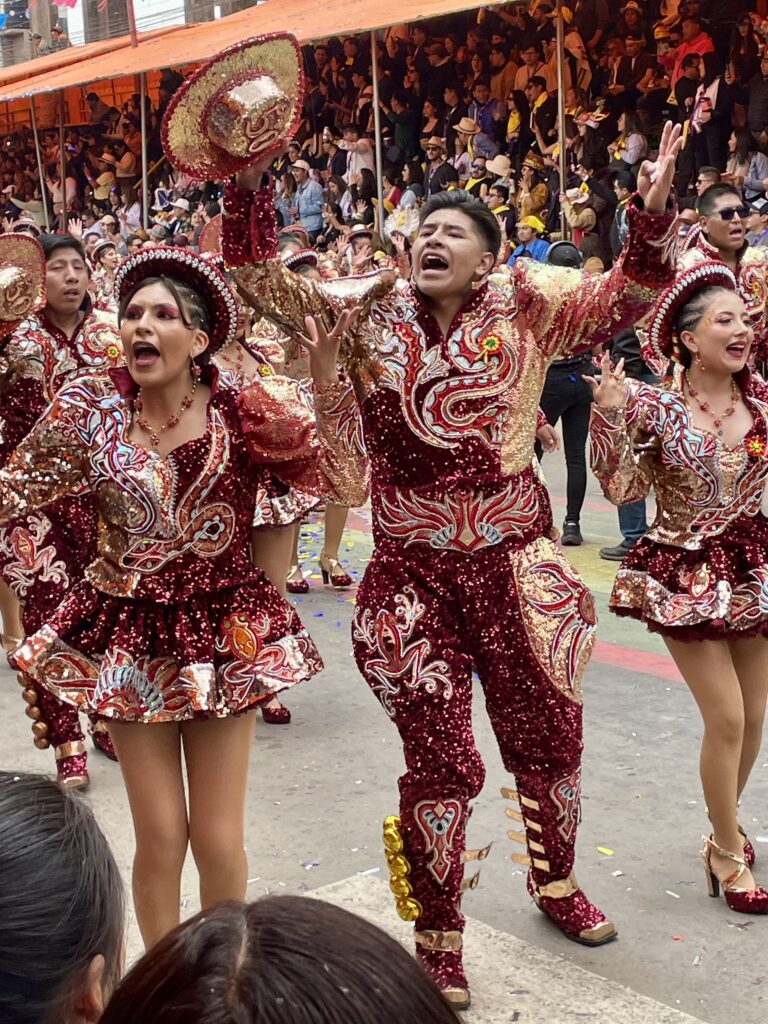
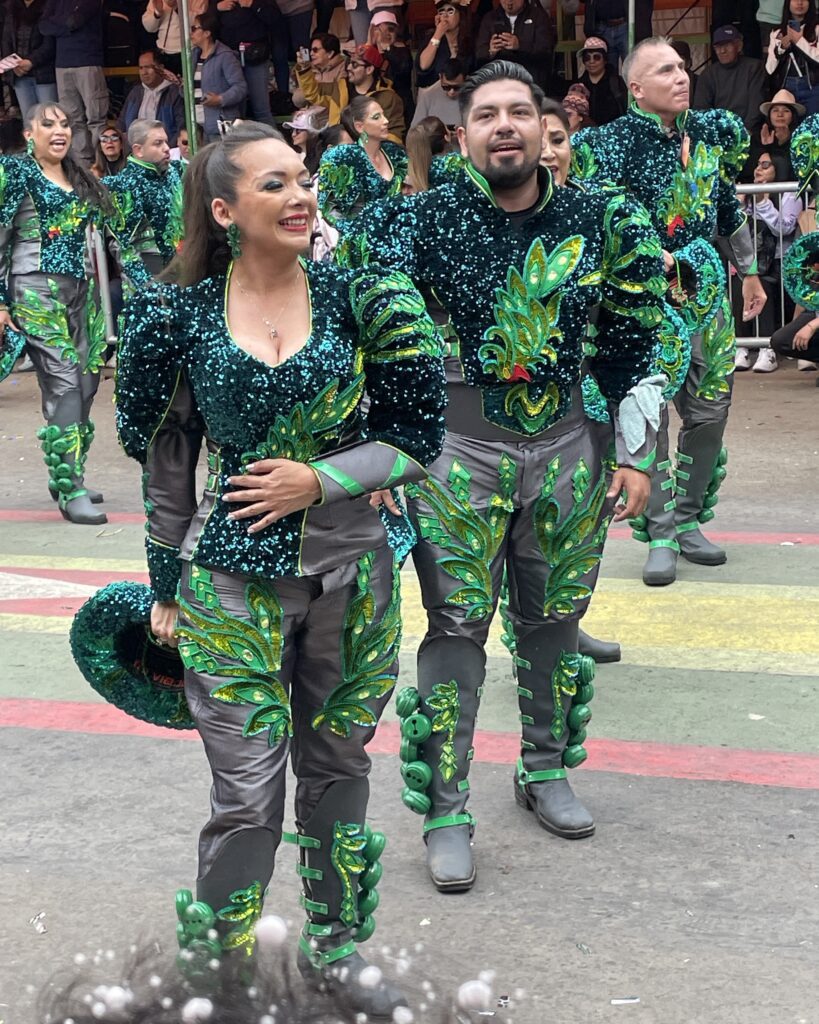
Just look at the details on these stunning hand-made costumes!
Did you hear the crowd yelling “Beso, Beso!”? They are asking for a kiss from the ladies. They yelled this to the old ladies, too!
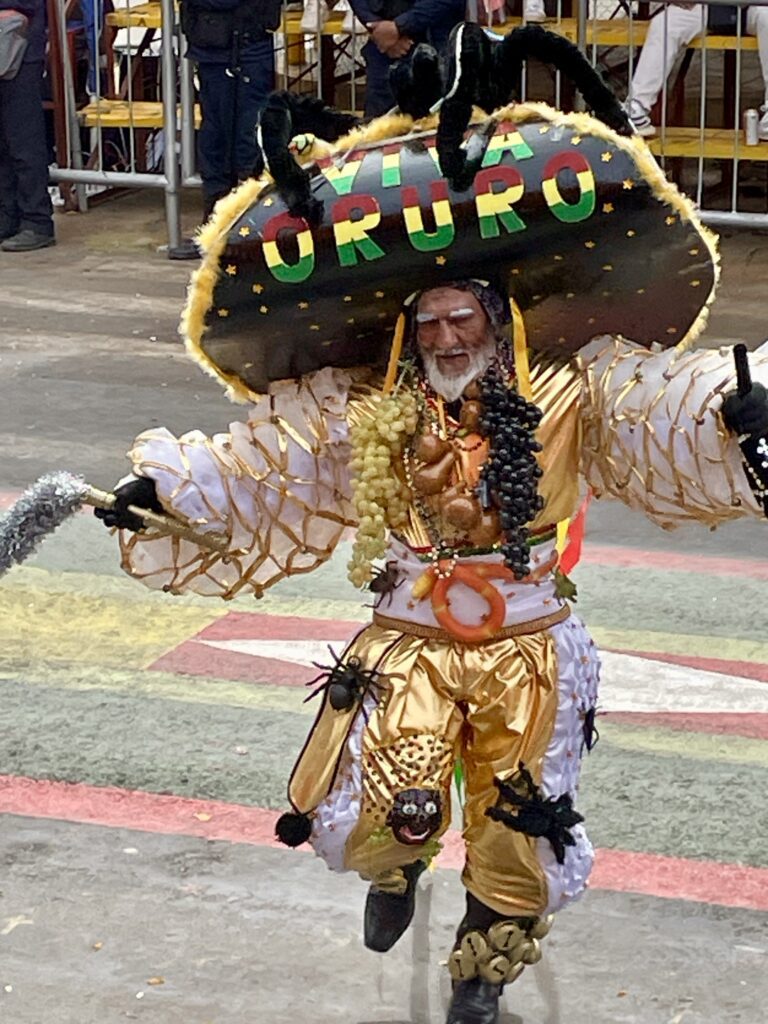
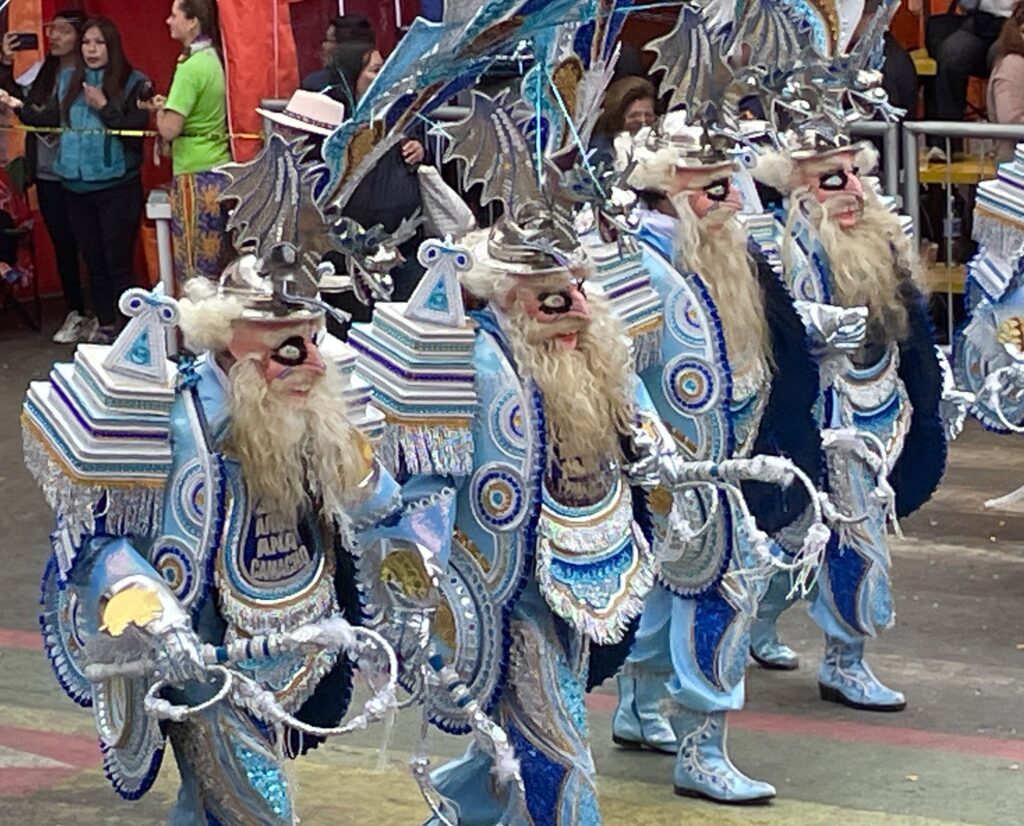
King Bosses (Rey Corporales)
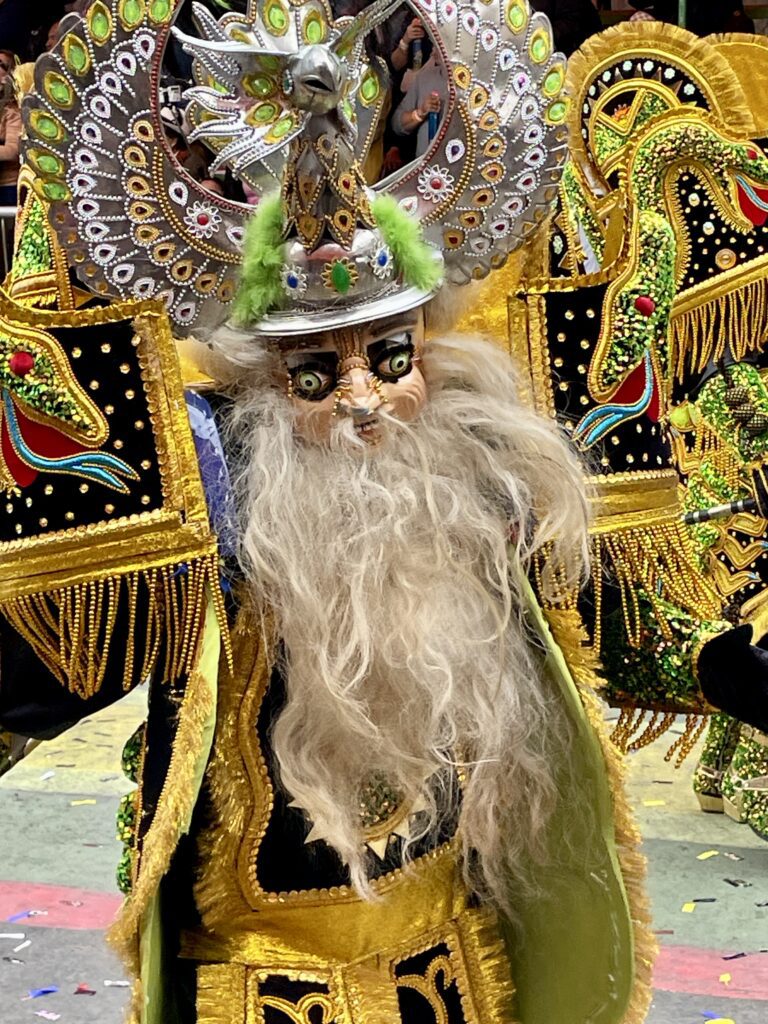
The King Bosses were the bosses of the Corporales, but again, they were still slaves under the authority of the the Spanish Colony. So, their costumes show signs of authority, like their whip or the silver in their headdresses, but their extruding tongues and bells (chains) on their feet give away the fact that they still didn’t have all the power.
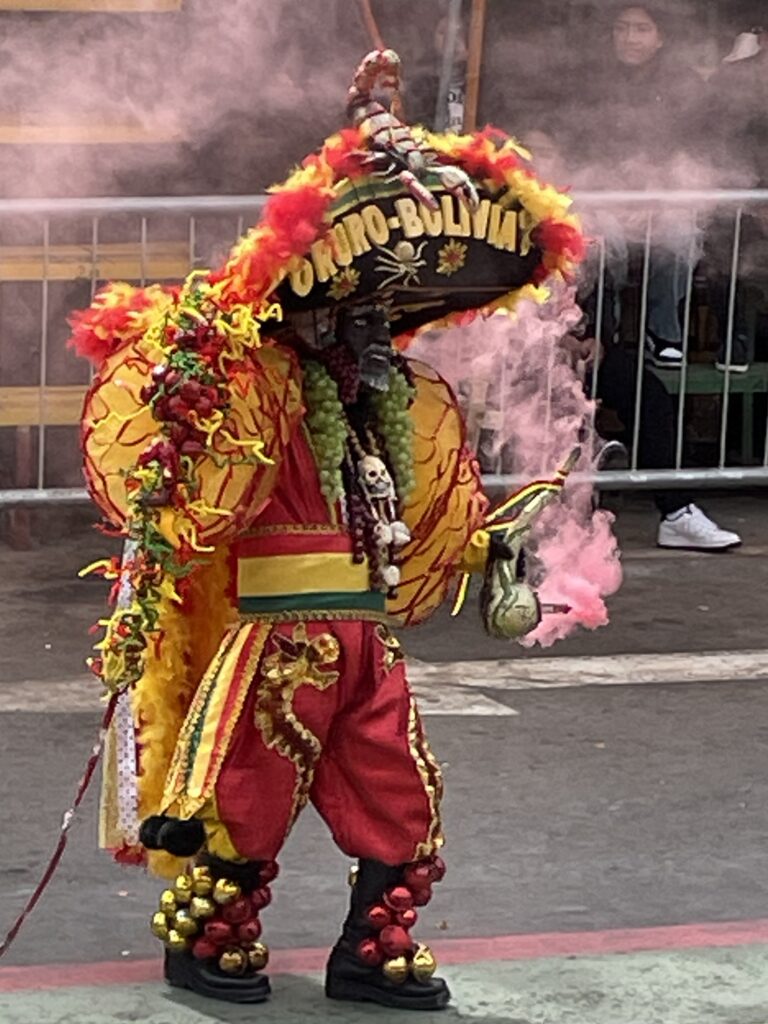
The Era of the Train (Ferroviaria)
The arrival of the trains in the parade really made the crowd go wild!


Bands
Of course every good parade has a lot of marching bands. The students told me that music is so important in Oruro, all the schools have a music department with instruments easily available for students to learn how to play. The bands I saw in the parade came mostly from Oruro, but others were from neighboring cities around Bolivia.
This band, from the nearby town of Poopo, integrated Bolivia’s proud mining heritage into their uniforms as each are wearing miner’s helmets.


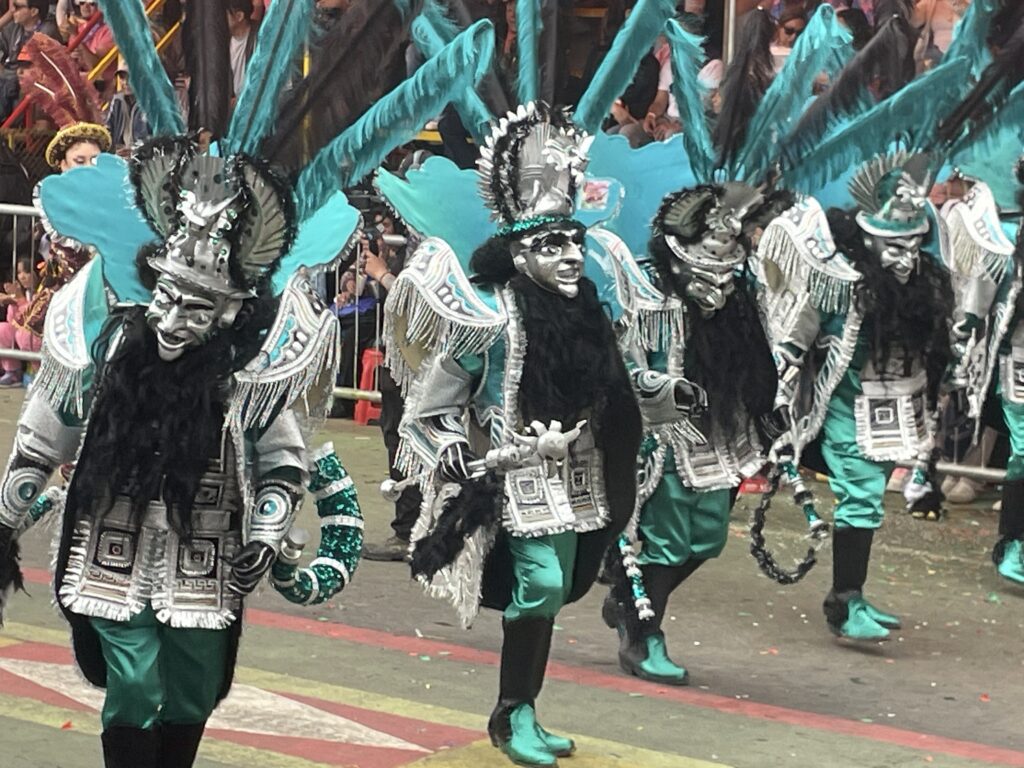
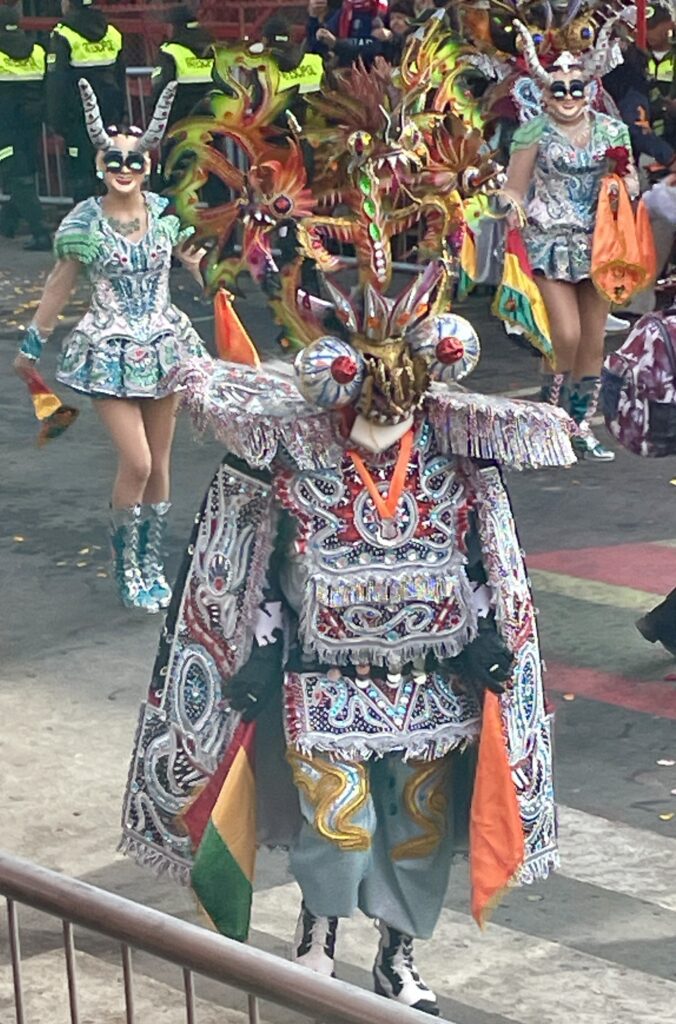
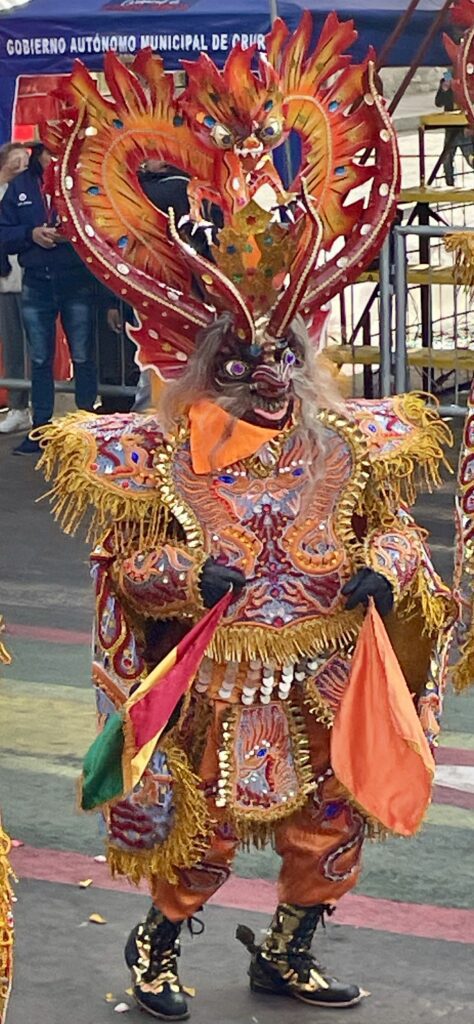
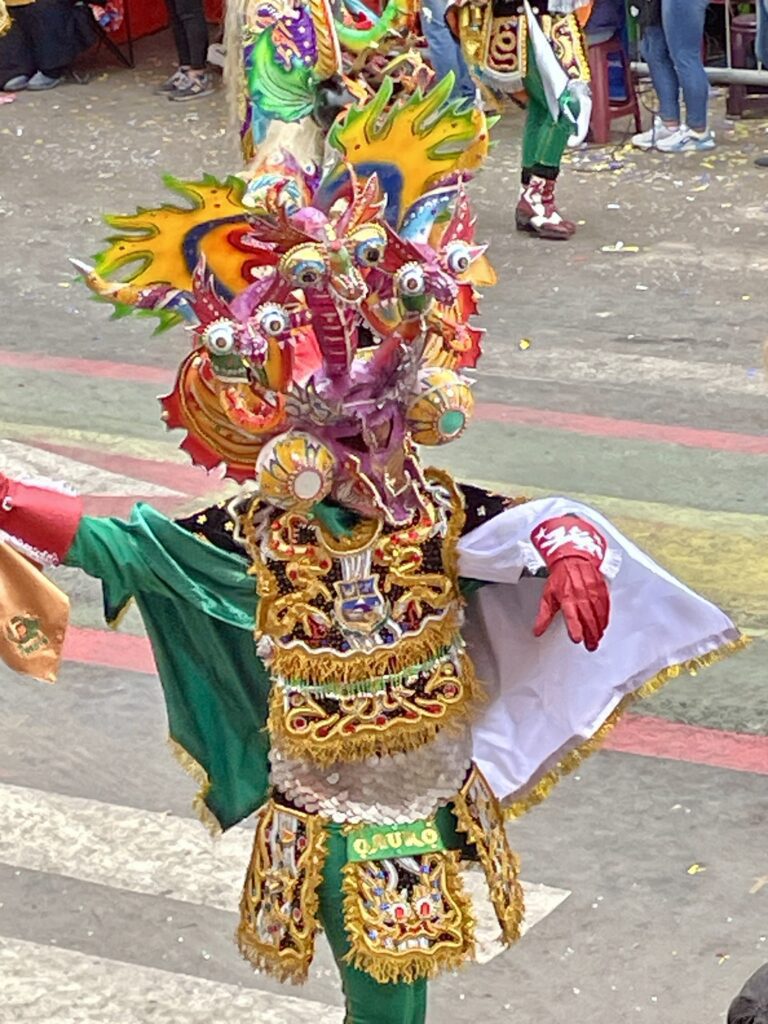
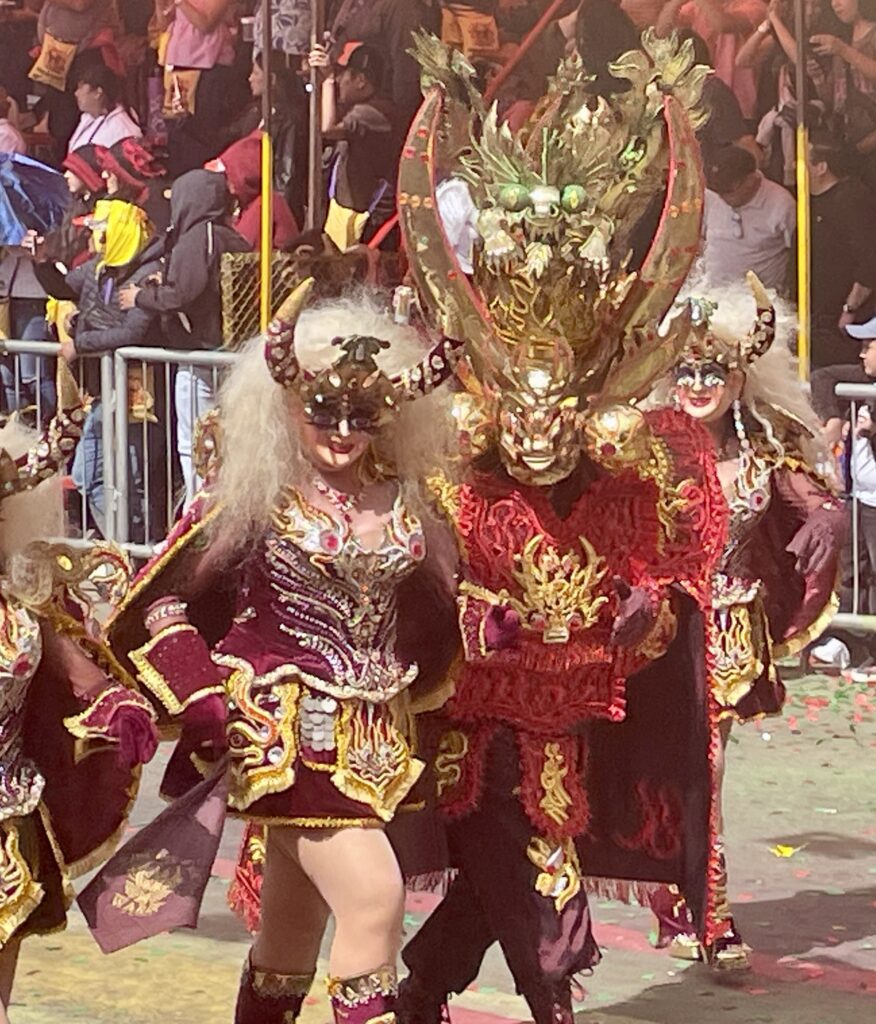
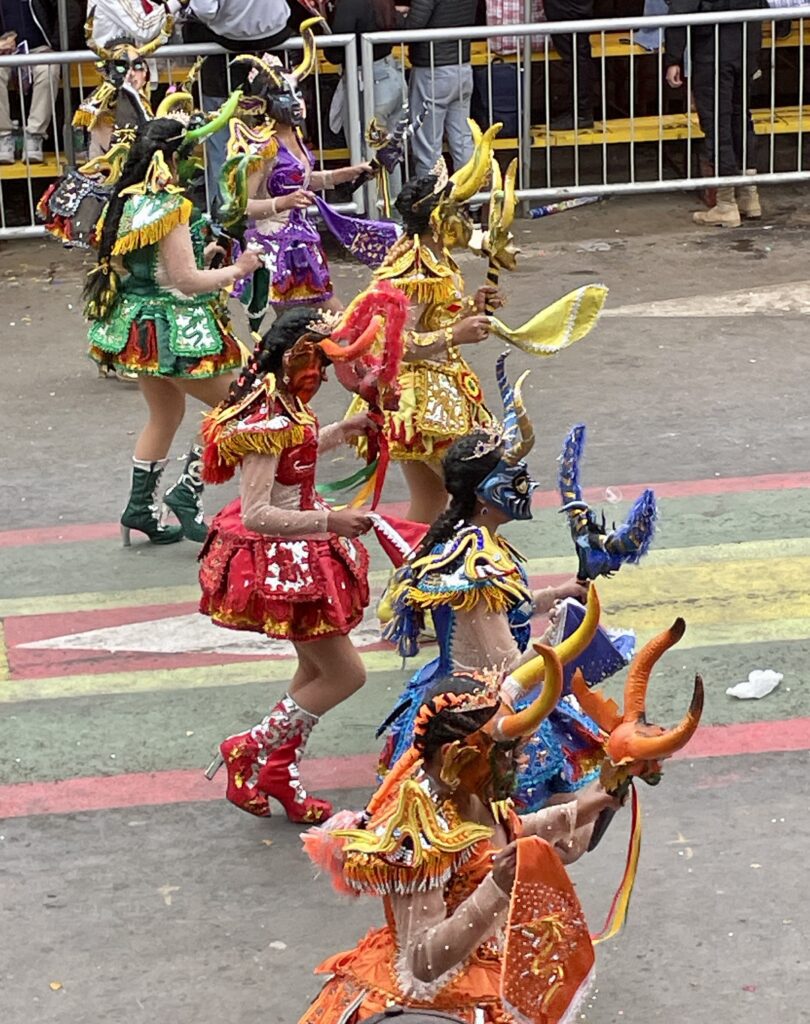
Devils (Diablos) and Devil Wives (Chinas Diablas or China Supay)
Bolivians, as I’m coming to understand, have complicated belief systems that combine traditional myths and the catholic religion. Therefore, amongst all the historical references, a key focus of this parade included the interweaving of traditional mythology with modern religious beliefs.
One example of this is the prominent character of the Devil. Devils are a central part of Bolivian culture. Although the church promotes that they represent evil, they are also revered as powerful spirits that can simultaneously tempt and protect the citizens of a community.
For example, devils may tempt you with the seven deadly sins, represented by the seven colors displayed in many of the devil’s costumes. The devils also represent the deity of the underworld and the keeper of the earth’s mineral wealth and the mines. People in Bolivia believe that if you pay reverence to the devils, they will protect the miners and your family from bad things to come.
In the parade, the enticing dance of the devils is called the Diablada and the creative masks and costumes cannot be missed!
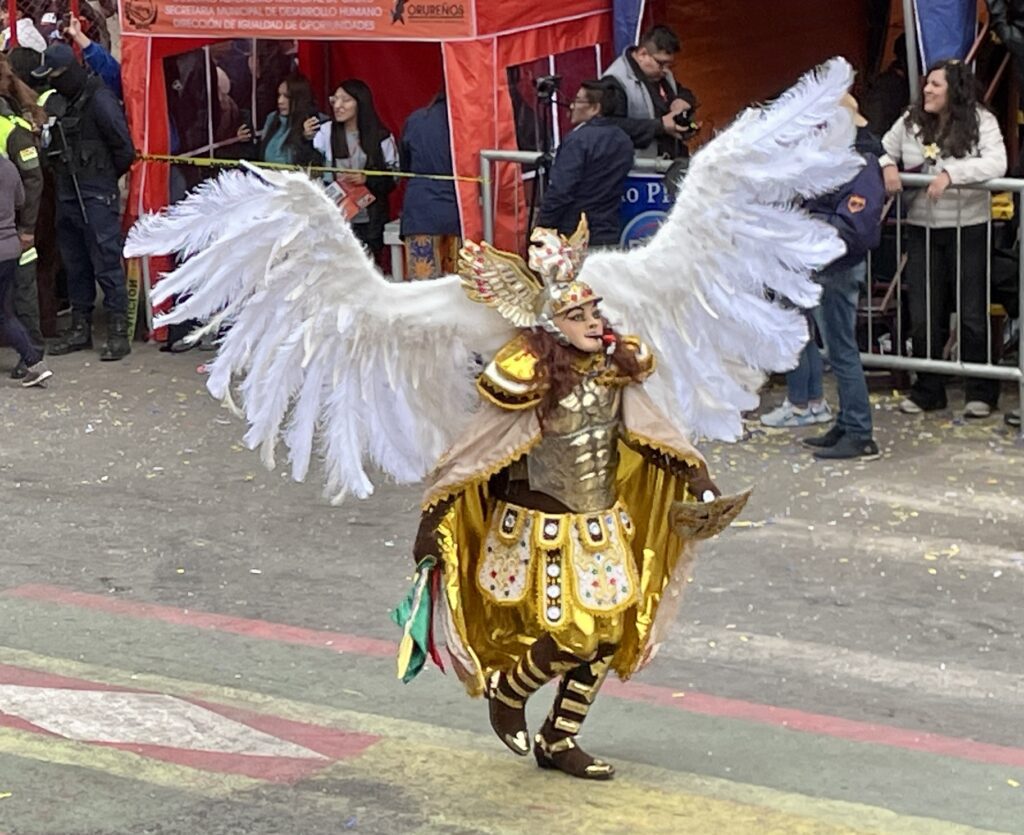
Arcangel (Arcángel Miguel)
Bolivians also believe in the power of good over evil and so, in front of every group of dancing Devils, an Archangel led the way for goodness over the sins of the world. The angles also represented the Seven Virtues.
Bears (Osos or Jukumari)
These characters are the Andean Spectacled Bear and symbolically, they act as a mediator between the good and evil entities- like the devils and the angels. They are revered for their strength, courage and dedication to help those in need. They also brought the comic relief to the parade. Whenever they arrived, the crowd would erupt into chants of “Oso! Oso!”


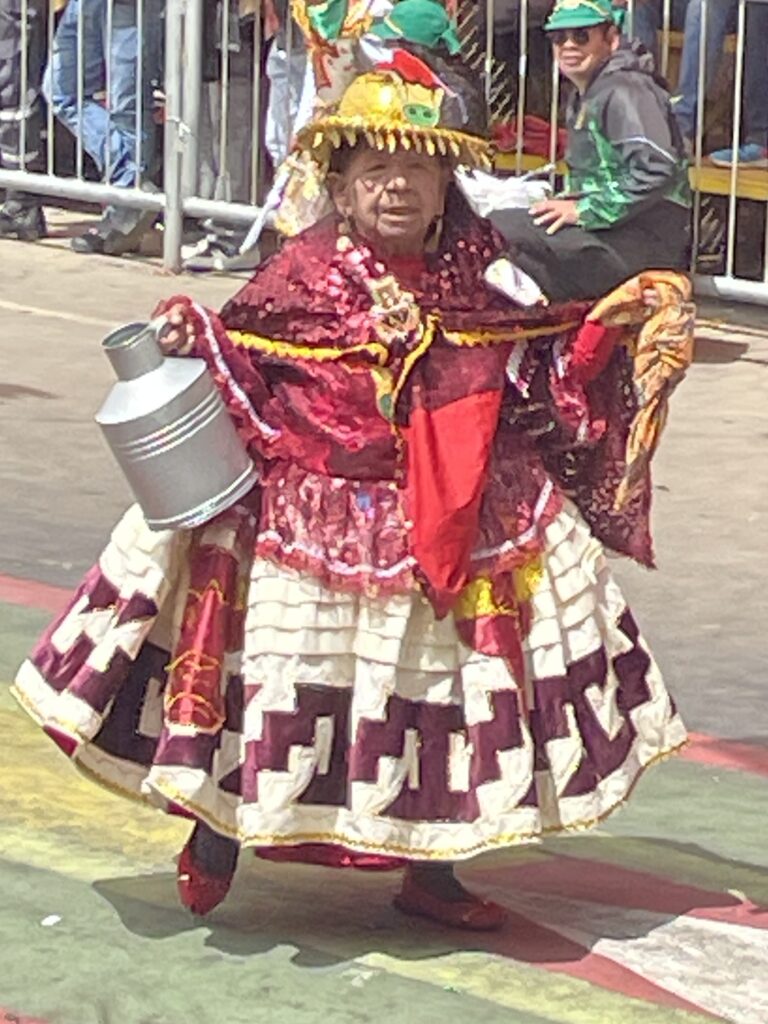
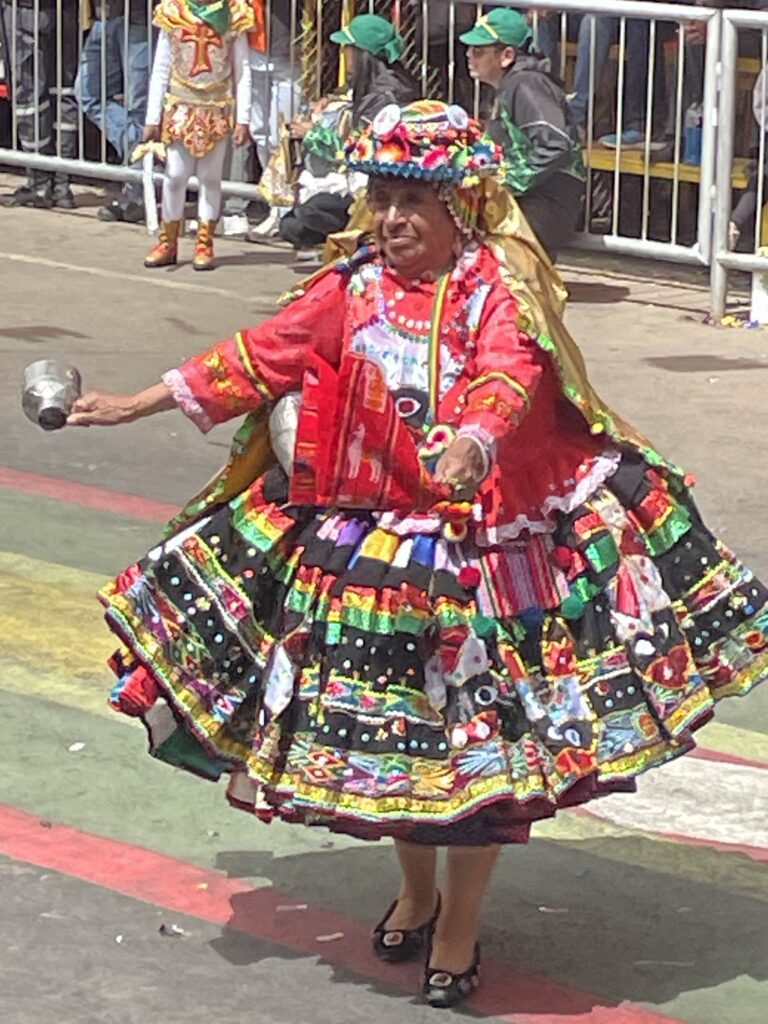
Farm Workers (Ganaderos)
These ladies paraded with their colorful skirts and milk cans.
Llama Herders (Llameradas)
These groups represented the Aymara Indians highlighting the economic and spiritual role that llamas and alpacas have played for centuries within their culture. Many groups carried little stuffed llamas with them.


Traditional Textile Workers (Kullawada and Waphuri)
The Aymaras are known for their skilled knitting and so their costumes reflect their talent. Their dance also included the character of the Waphuri, the ugly, exaggerated-faced Spanish Colonizer, to comically debunk his power.


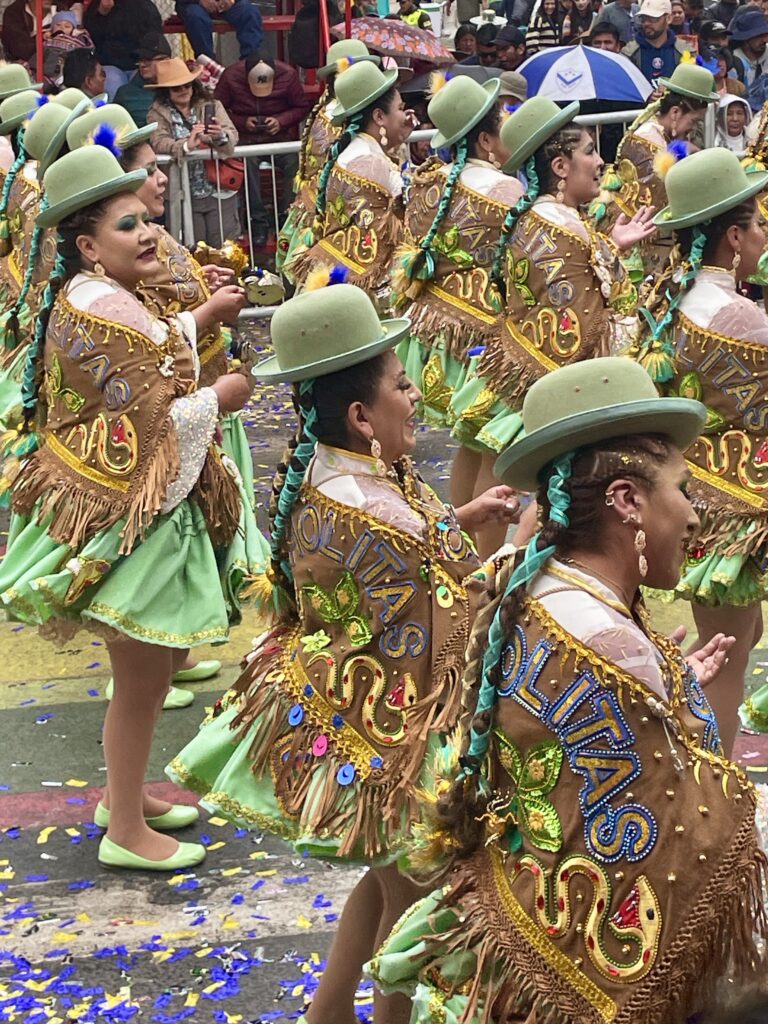
Indigenous Bolivian Women (Cholitas)
Modern Cholitas are strong and powerful Indigenous women known for breaking many glass ceilings in Bolivia.
Ritual Fighters (Tinkus)
These energetic dancers performed an ancient folkloric dance representing a ritual fight. During pre-colonial times in the region of Potosí, Bolivia, fighters would come together to resolve conflicts while offering their blood to Mother Earth in a showing of strength and cultural pride. From what I understand, this type of community law enforcement still reigns today in remote Indigenous villages.


People of the Amazonia (Tobas)
These dance groups represented the historic warrior tribes as well as today’s diverse Indigenous communities that make up Bolivia’s lowlands. Shamen, or spiritual healers, often accompanied these dance groups. Their dance exemplified their history of resistance.


So, that is a summary of the most prominent characters featured in Oruro’s Carnaval parade. But those costumes! I want you to understand some of the symbolism featured in each.
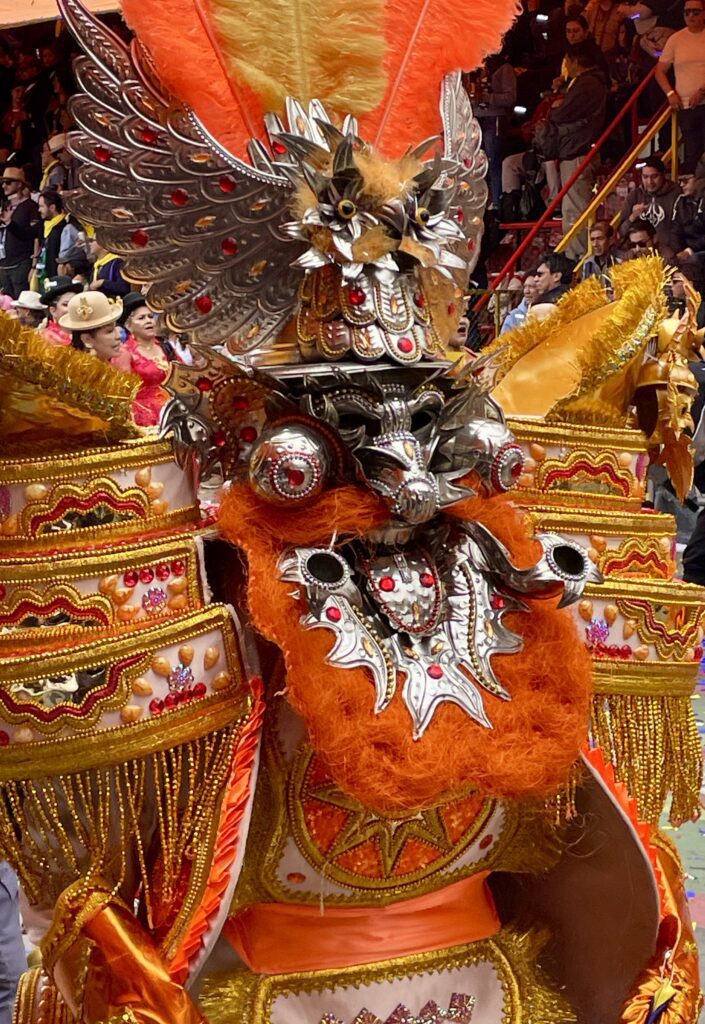
Almost all of the costumes had one of the following symbols: toads, ants, lizards, or serpents. The designers meticulously incorporated these symbols into the costumes to pay homage to a local myth.
Once upon a time, there were “Four Plagues” that were sent by an evil deity to destroy the local Uru Indigenous people. He did this because they were worshiping Mother Earth (Pachamama) more than him. The story goes on to tell about the battle of good over evil, but in an effort to appease the Spanish Colonizers a long time ago, the people changed the ending of the myth to have the Catholic Virgin of Socavón (Virgen del Socavón) defeat the plagues. This is why the parade is dedicated to the Virgin; it’s officially titled La Entrada de Peregrinación, or the Pilgrimage to the Sanctuary of the Virgin. Also, the entire parade route ends at the Socavón Sanctuary, the primary Catholic church at the center of Oruro.
Can you spot the plagues (toads, ants, lizards and serpents) in the costumes pictured below?
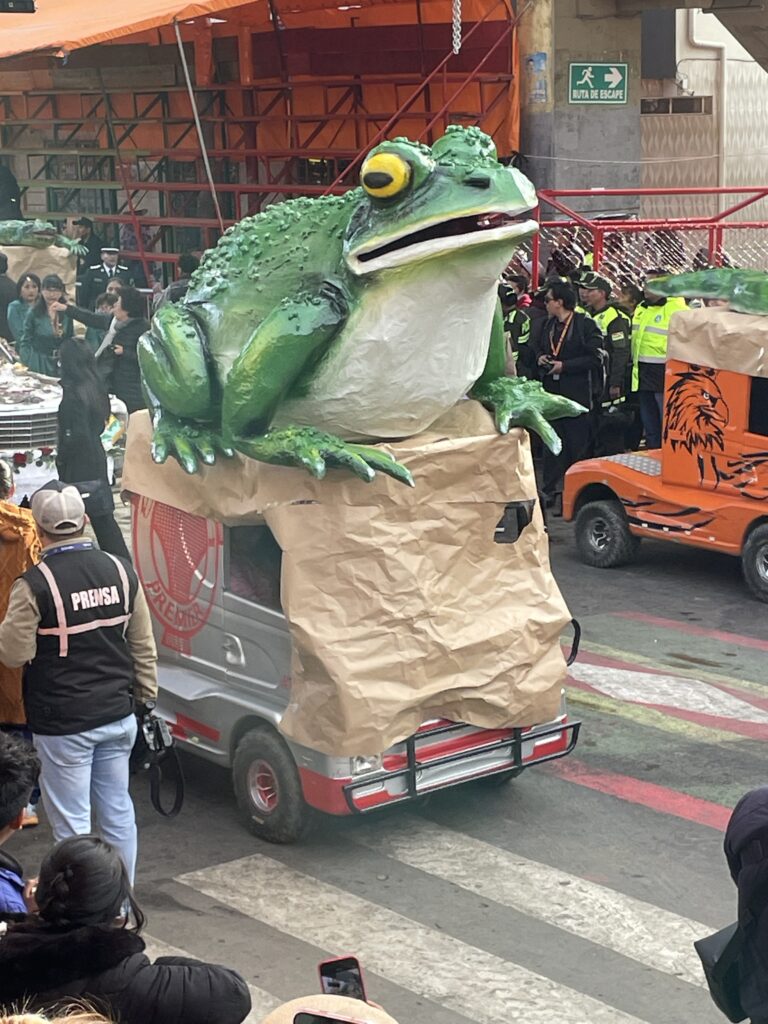
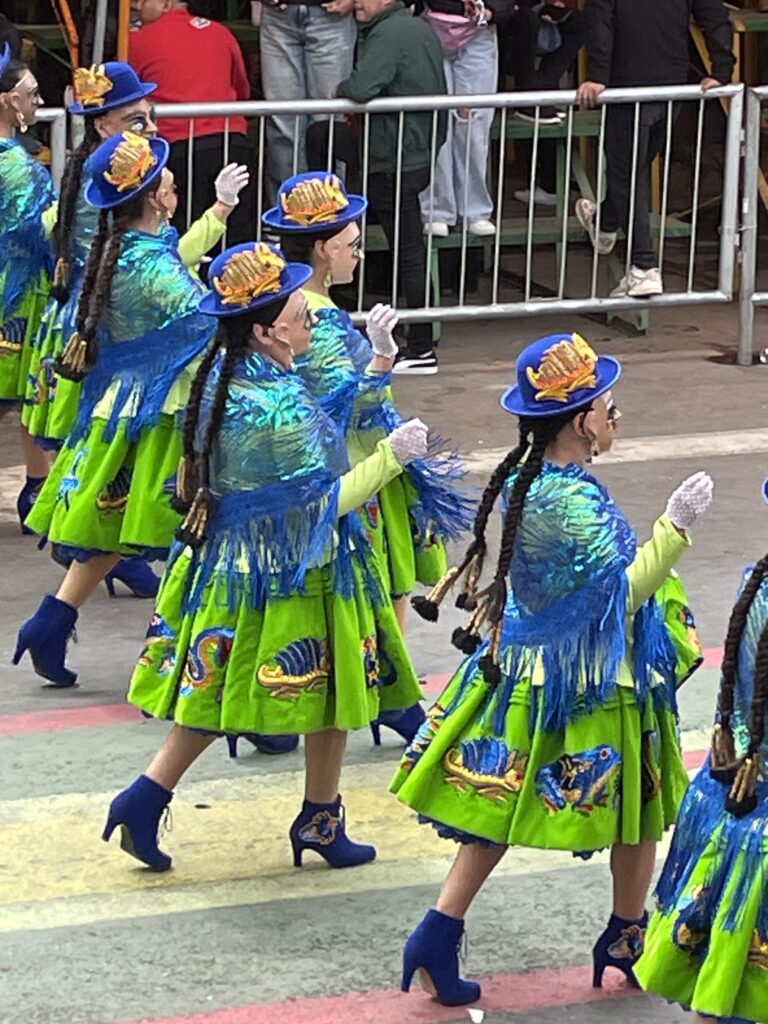
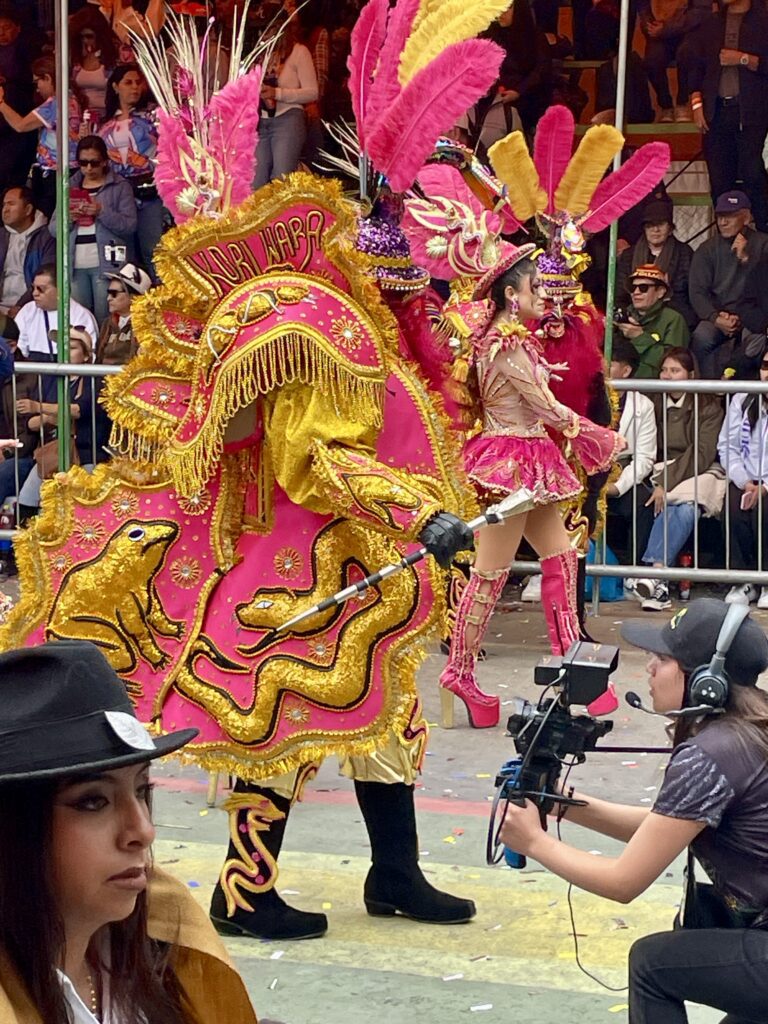
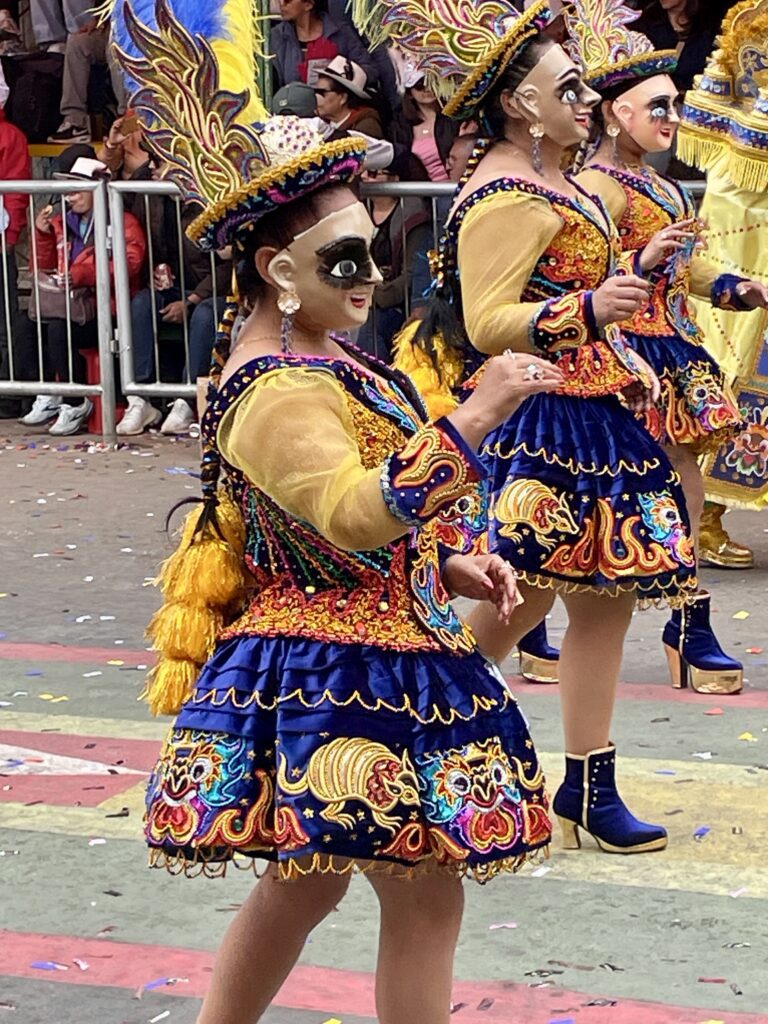
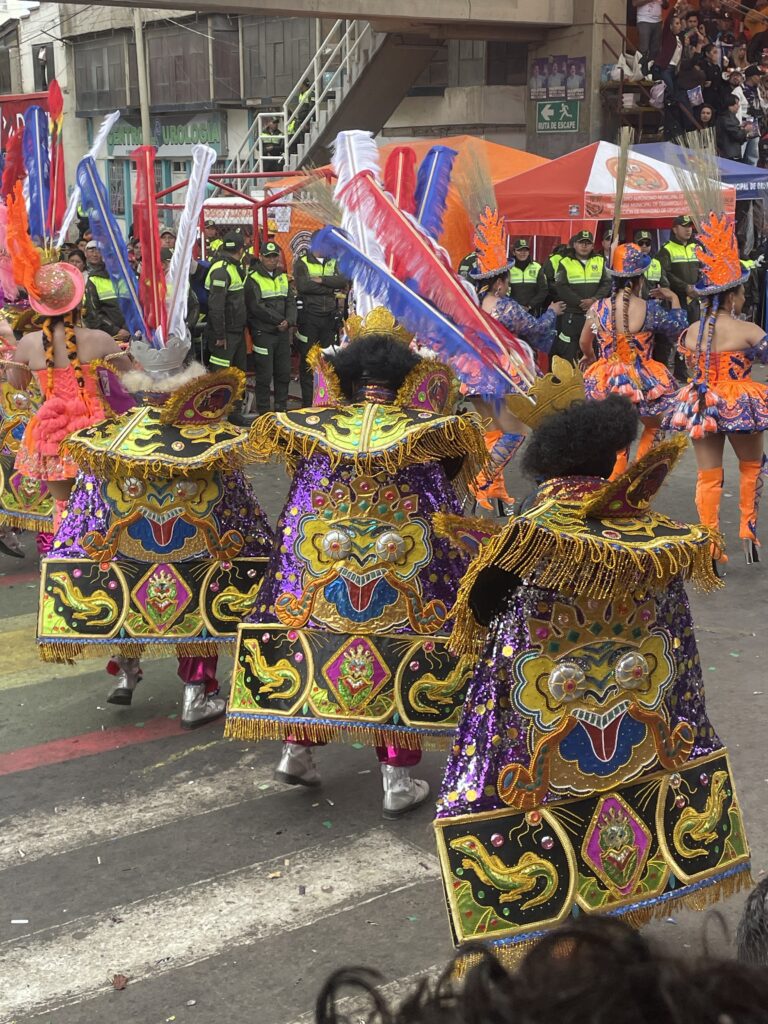
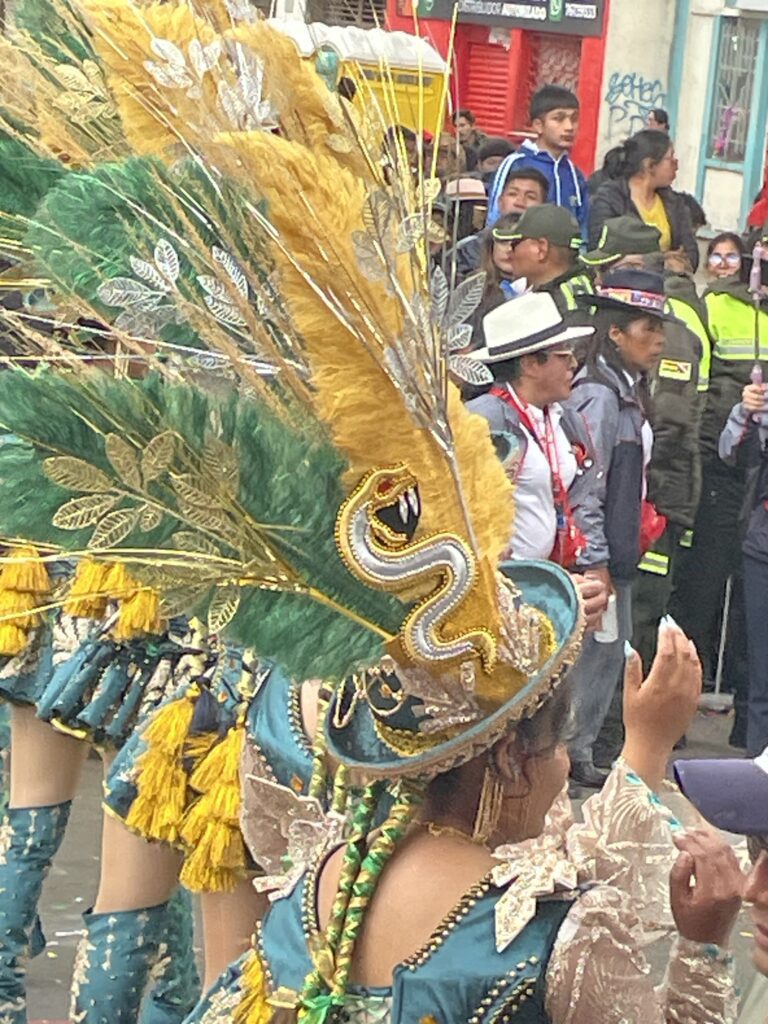
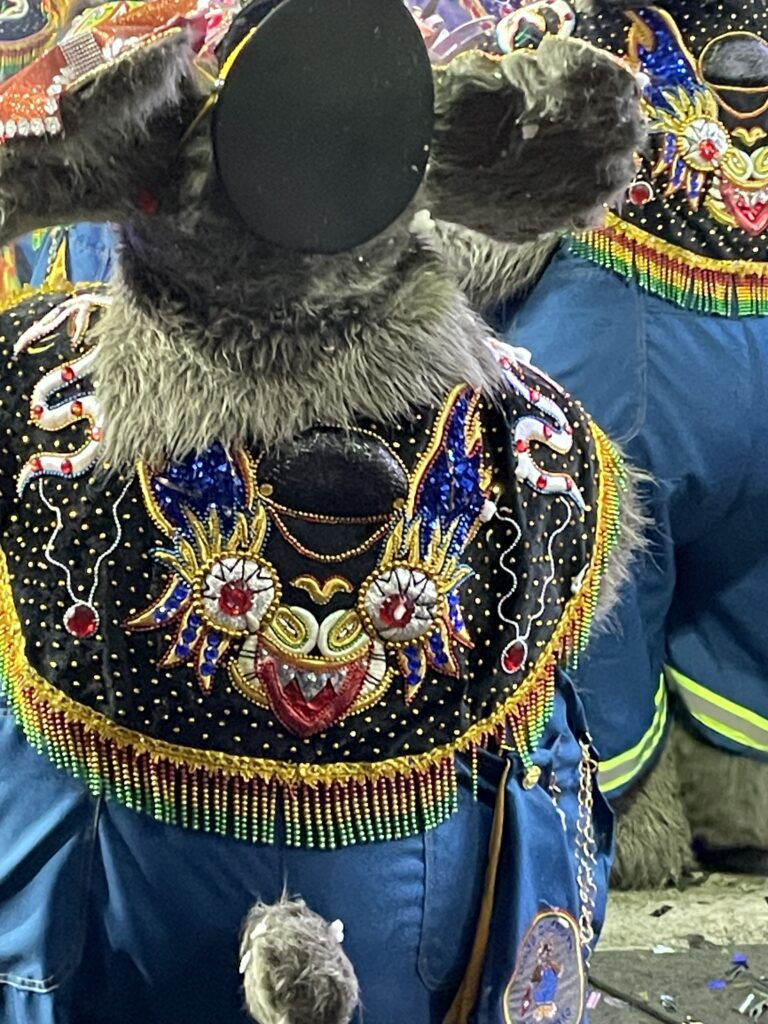
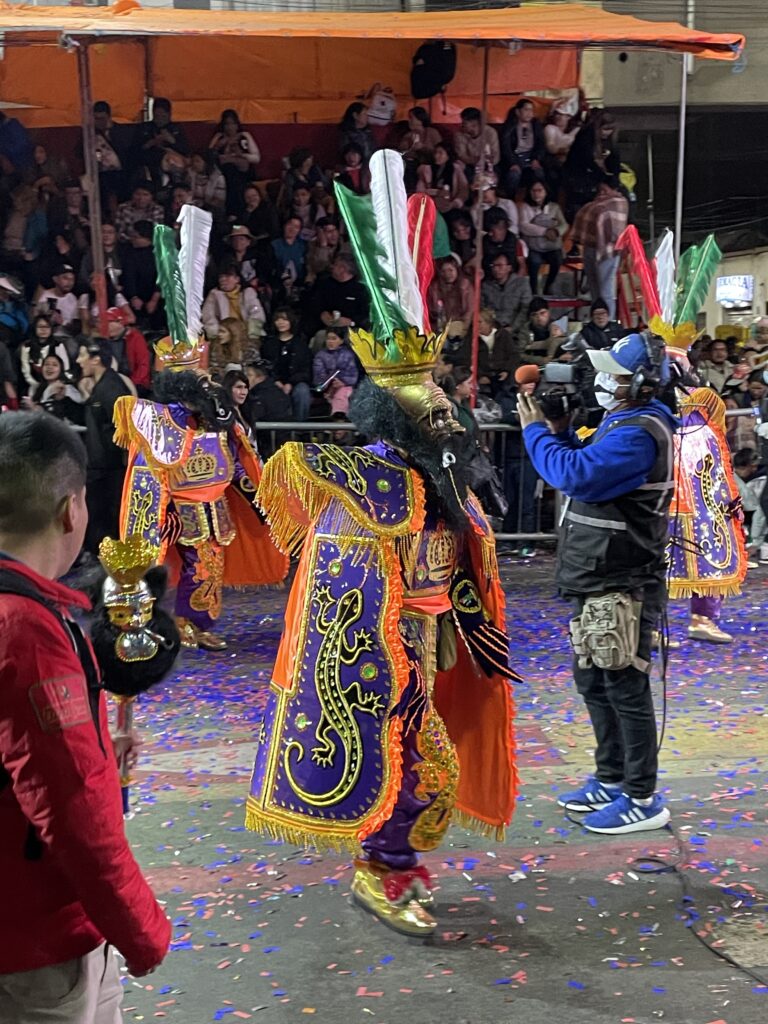
Did you also notice the armadillo? For some reason, this is the official animal representing the people of Oruro. So, armadillos (kirchinchos) are integrated into many costumes as well.
Now that you have some appreciation for all the history and symbolism, sit back and enjoy the show! It was a lot to take in.


Between groups, there was always time for spectators to get into a good espuma fight – think sweet smelling shaving cream that dissolves after awhile.
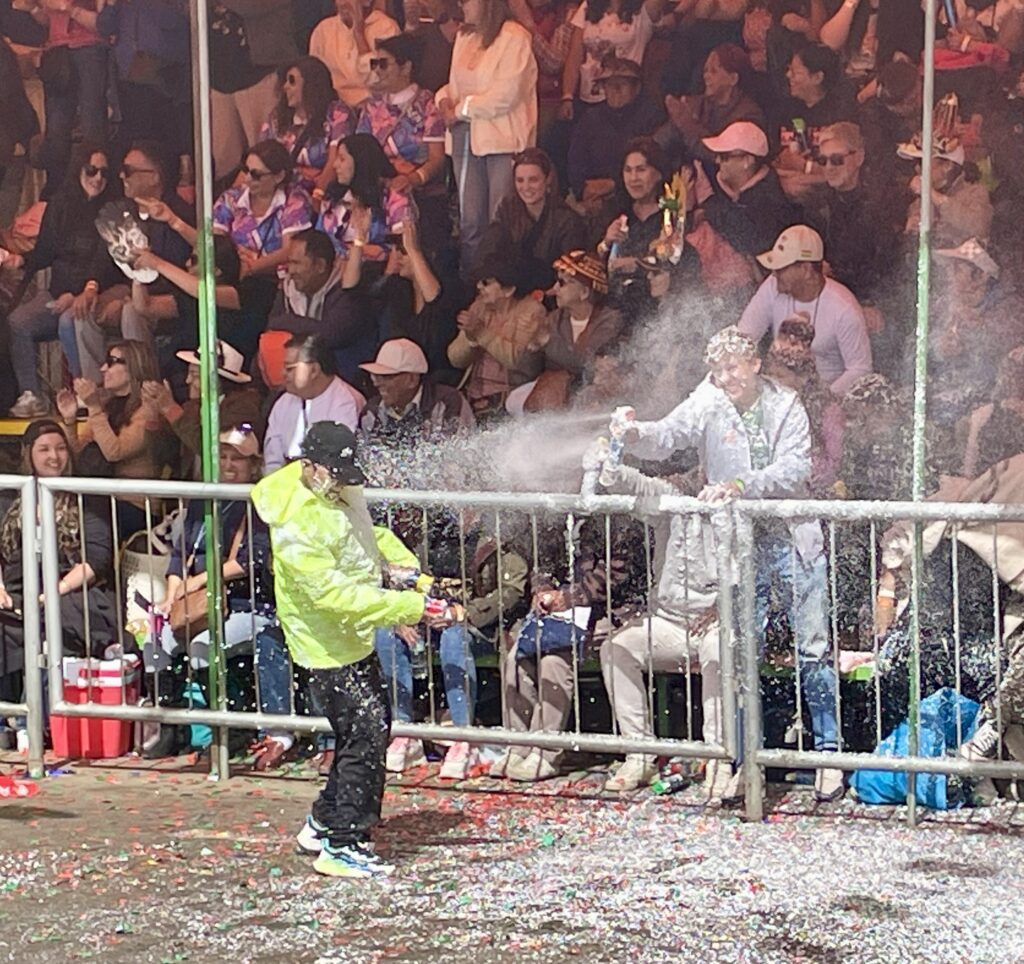
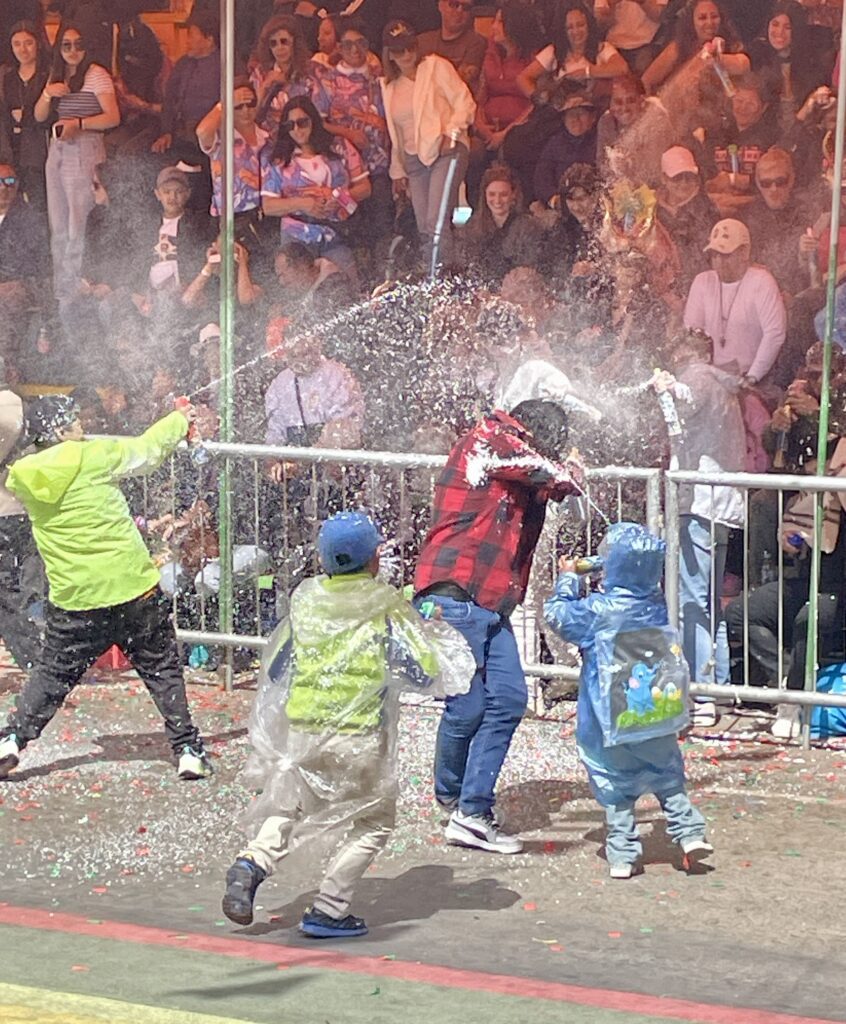
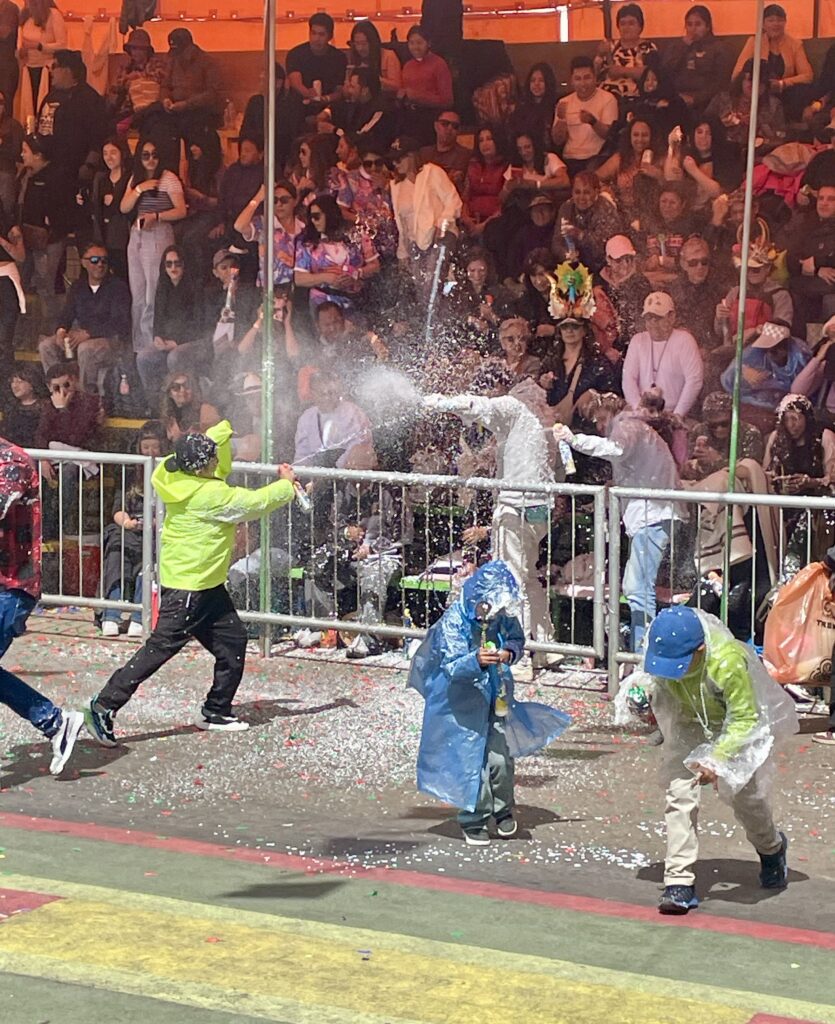
Then, party a little with the college students….


And get back to the parade to sing all the traditional Bolivian songs…


Nevermind that it was getting dark, all the costumes have glow-in-the-dark features, or fireworks attached!
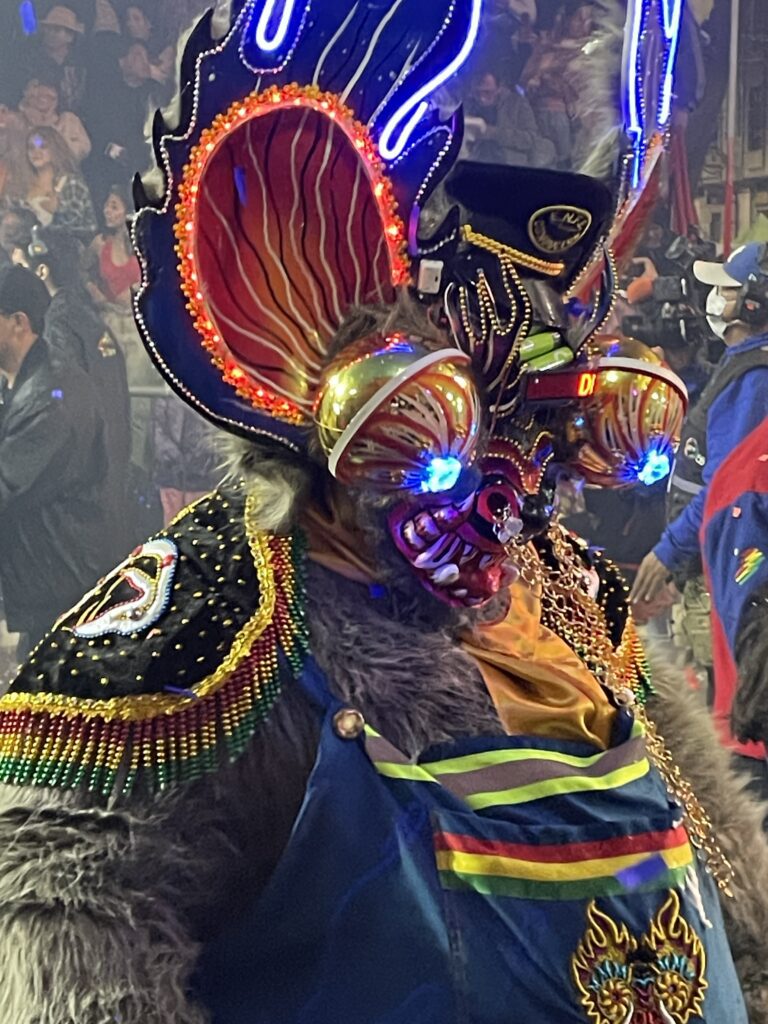
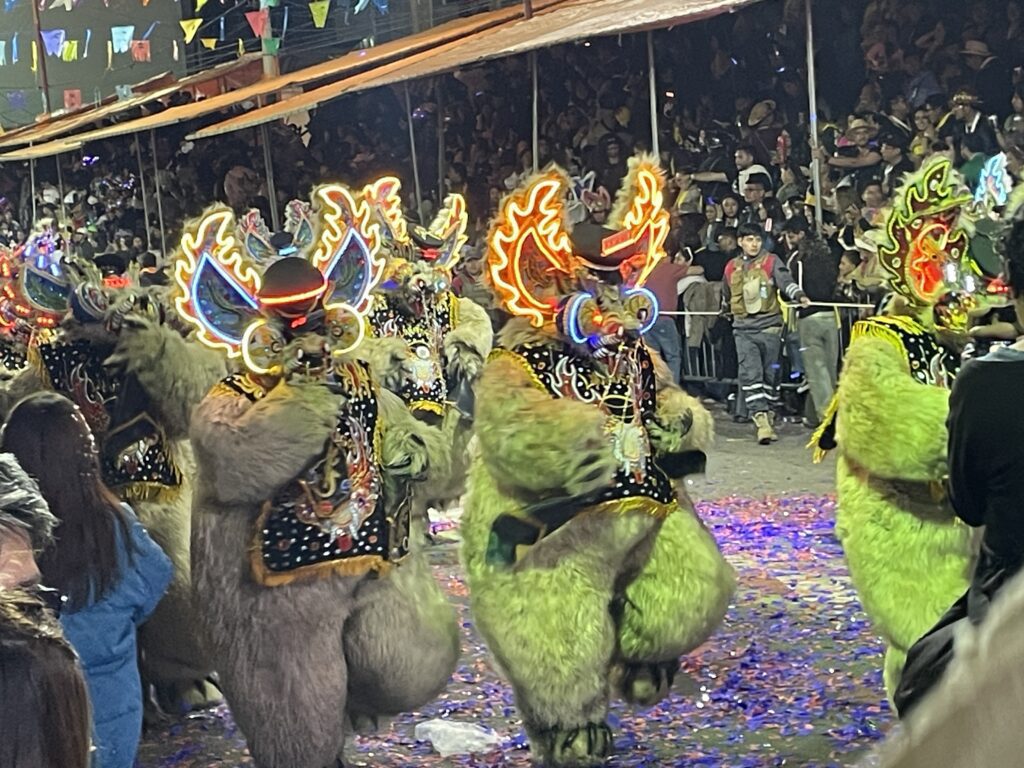
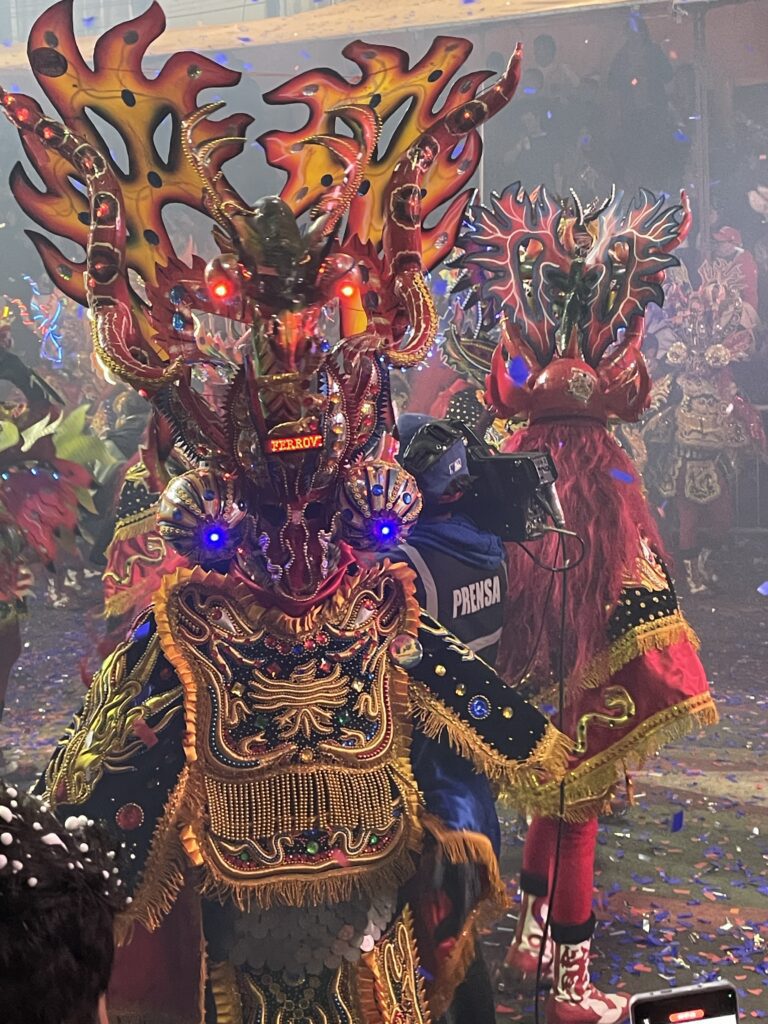
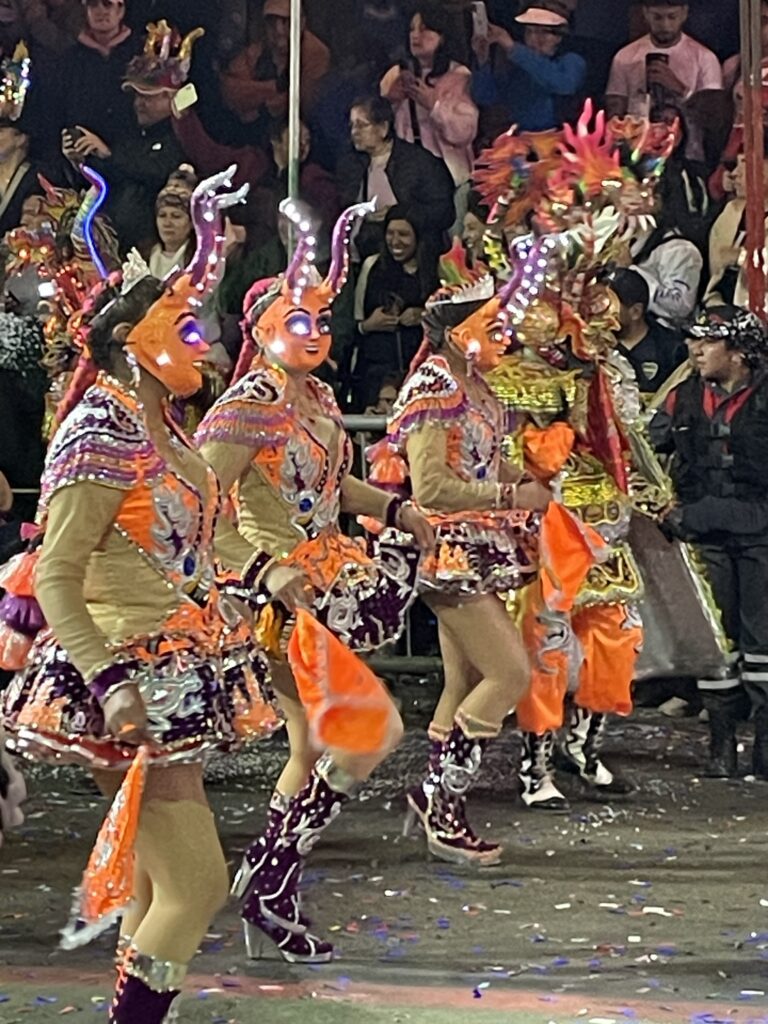
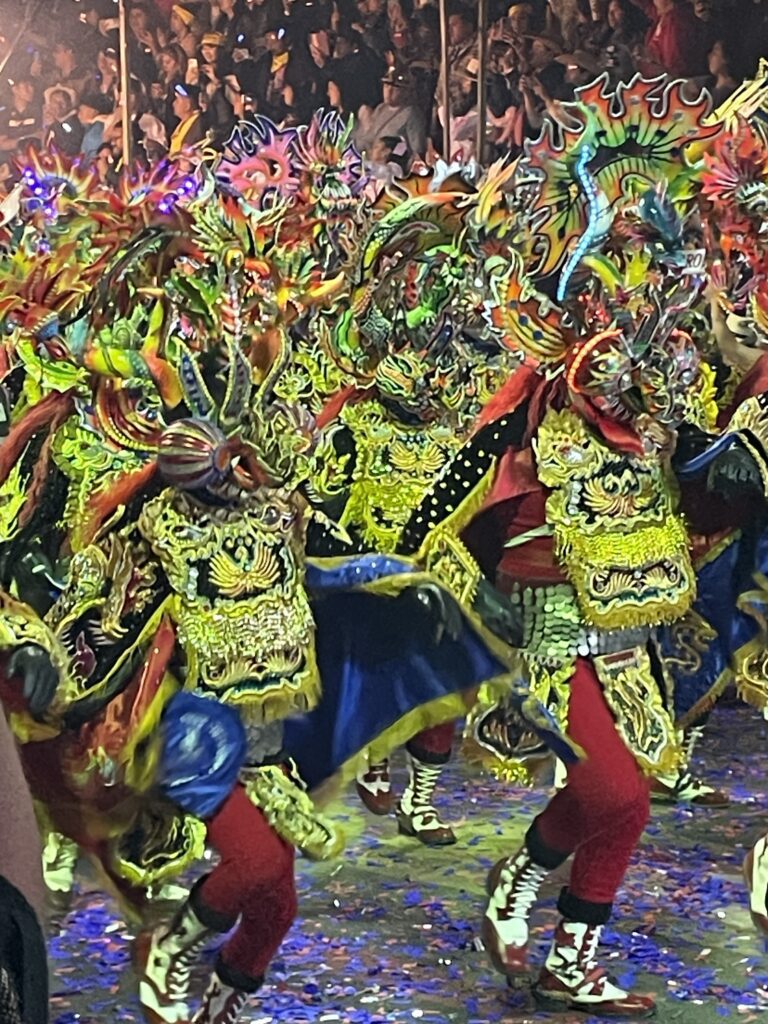
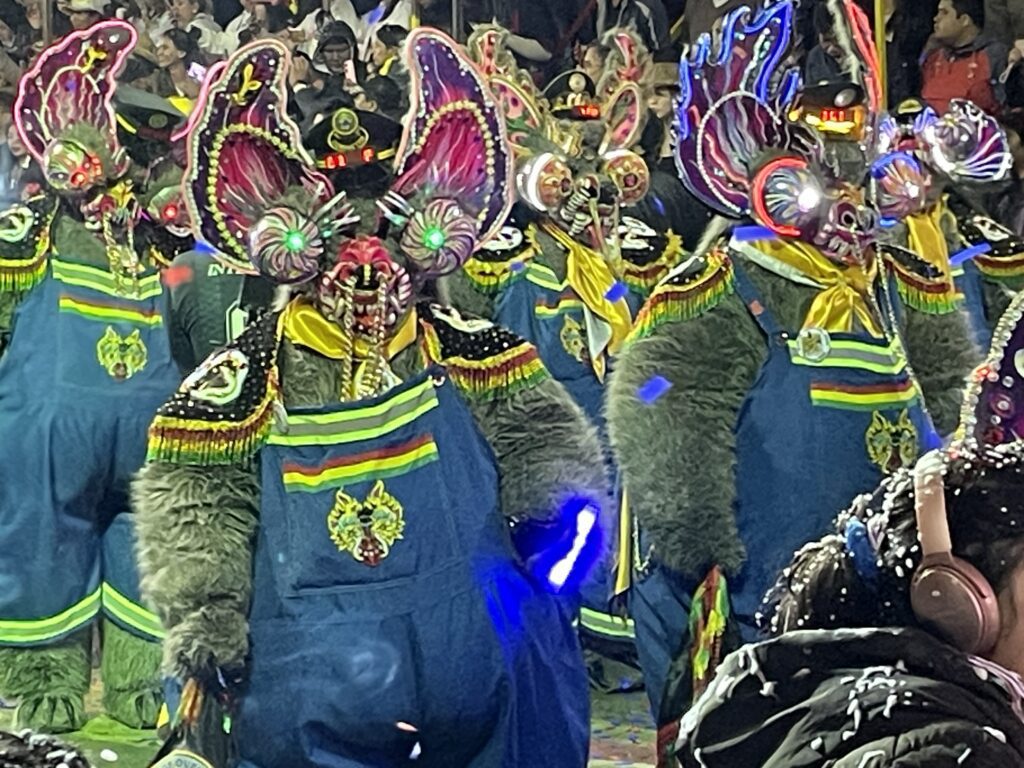
At one point, the dance groups were setting off their fireworks, a team with a small cannon on wheels ran up to set off a confetti bomb, and the students were raining the area with espuma! It was a wild show!


Are you exhausted? I was. I literally went home at 9:30pm and the parade lasted until 3:00am. Then, the next day, the same participants, and the same audience, did it all over again. Except, the Sunday parade is much more relaxed. The participants wear last year’s costumes and most don’t bother with the heavy masks. They do it all over again, just for fun!
“Viva Bolivia! Viva Carnaval!”